
Distracted dog walkers may be putting wildlife and livestock at risk, study finds
Dog walkers distracted by their phones, conversations or other demands can miss their pets fouling, disturbing wildlife or approaching livestock, according to new research from the University of Surrey.
Credit: Getty Images
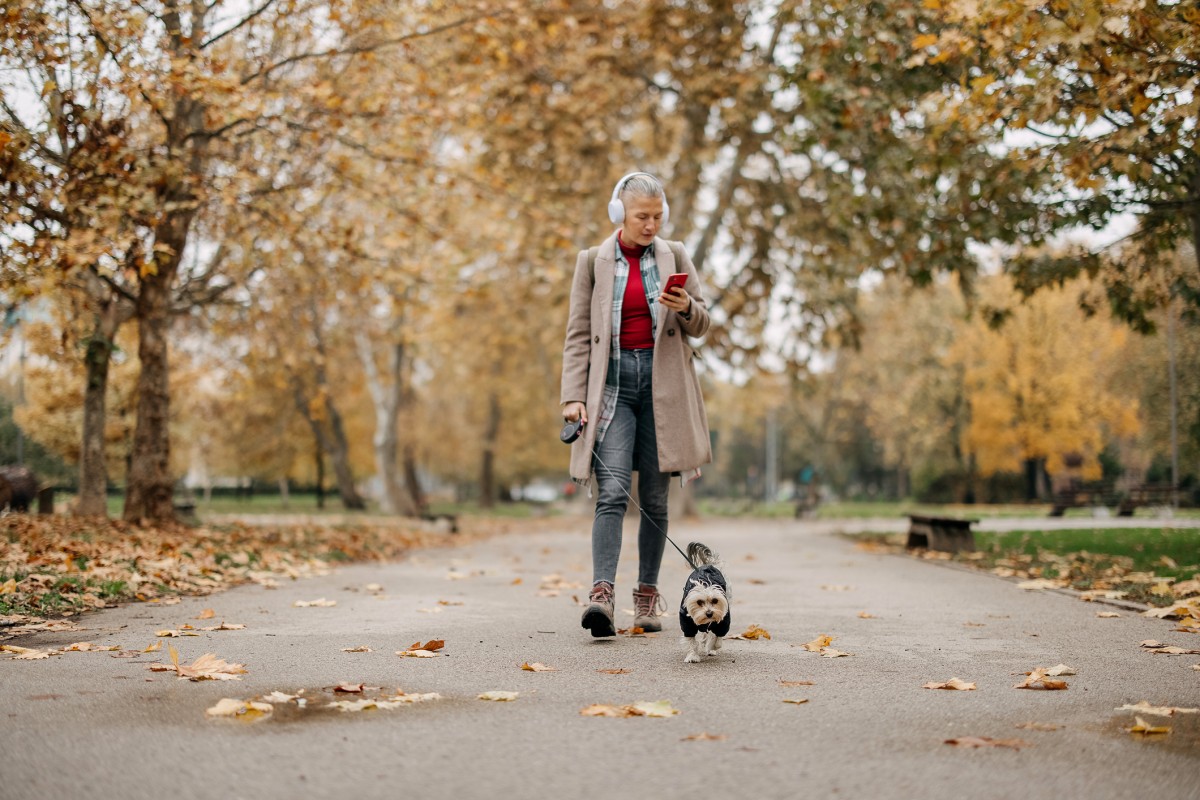
The study, published in Society & Natural Resources, found that environmental problems associated with dog walking were often linked to divided attention and poorly placed infrastructure rather than deliberate irresponsibility.
Researchers carried out 40 hours of observation at Puttenham Common, the Chantries and St Martha’s Hill, Norbury Park and Denbies Wine Estate. They also held a workshop with 15 farmers, land managers, countryside business owners and conservation professionals.
Across the observation periods, researchers recorded 11 occasions when dog fouling was missed. Waste was heavily concentrated within 50 to 100 metres of car parks and along busy paths, reflecting dogs’ tendency to toilet near the beginning of a walk.
Walkers using phones or headphones sometimes failed to notice their dogs fouling, leaving paths or entering sensitive habitats. People walking socially could also become absorbed in conversation, while professional dog walkers had to divide their attention between several animals.
The researchers also observed off-lead dogs entering undergrowth, disturbing birds and approaching livestock. However, the majority of walkers consistently picked up after their dogs, with some even collecting waste left by other animals.
Dr Tom Roberts, Senior Lecturer in Environmental Sociology at the University of Surrey, said:
“Dog walkers are often portrayed as either responsible or irresponsible, but our research shows that the reality is far more complicated. Most people care deeply about their dogs and the countryside. Problems frequently arise because their attention is divided or because facilities do not match how dog walking actually happens.”
Workshop participants suggested placing bins where dogs commonly toilet rather than only at entrances. They also supported dedicated off-lead areas away from sensitive habitats, community-led stewardship and short, friendly signs placed at junctions or other points where walkers make decisions.
Researchers observed that seasonal signs explaining the vulnerability of ground-nesting birds attracted more attention than generic instructions to keep dogs on leads. However, engagement appeared to fall as the signs became familiar.
Haeyoung Eun, Innovation Lead at the University of Surrey, said:
“Simply giving people more rules is unlikely to solve these problems. Land managers need to work with the routines, relationships and practical realities of dog walking. Well-placed bins, timely messages and suitable spaces for off-lead exercise could make responsible choices much easier.”
The researchers argue that dog walking should be recognised as an important source of exercise, wellbeing, social interaction and connection with nature, while acknowledging that these same qualities can sometimes create unintended environmental pressures.
ENDS
Notes to editors
- For interviews with Dr Tom Roberts and Haeyoung Eun, please contact: mediarelations@surrey.ac.uk
- The full study has been published in: Society & Natural Resources
Related sustainable development goals


Media Contacts
External Communications and PR team
Phone: +44 (0)1483 684380 / 688914 / 684378
Email: mediarelations@surrey.ac.uk
Out of hours: +44 (0)7773 479911