
Surrey’s space degrees: which one should you study?
If you've ever been fascinated by a rocket launch, wondered how satellites navigate around Earth, or dreamed of helping design the next generation of aircraft and spacecraft, a degree in aerospace or space engineering could be your route into this exciting industry.
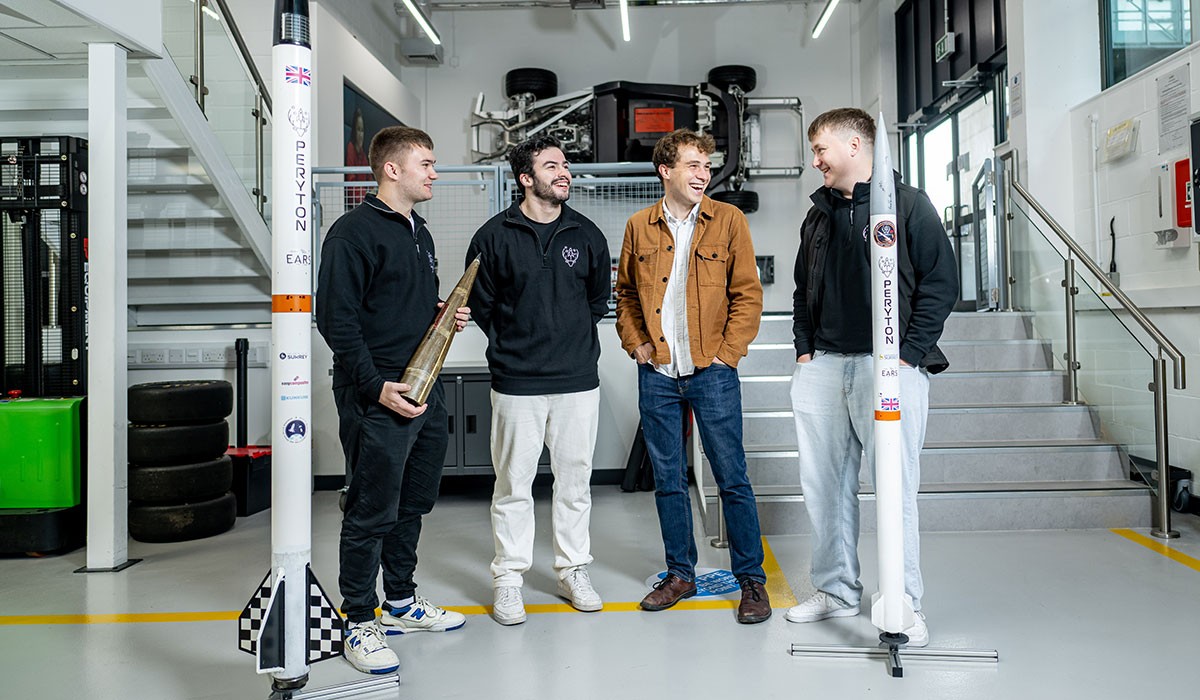
At the University of Surrey, we have three undergraduate degrees which offer different pathways.
- Aerospace Engineering BEng/MEng
- Astronautics and Space Engineering BEng/MEng
- Spacecraft Engineering BEng/MEng
At first glance, they might sound similar. All three involve advanced engineering, cutting-edge technology and opportunities to work in the aerospace and space sectors. But each has a different focus. We’ve put together this handy guide to help explain each one for you.
Aerospace Engineering
If you're interested in aircraft, rockets and spacecraft, our Aerospace Engineering BEng/MEng course gives you a broad foundation across aerospace engineering.
You'll explore the engineering principles behind flight, including aerodynamics, propulsion, advanced materials, design and computational modelling, alongside space systems. Our facilities include wind tunnels, flight simulation facilities and specialist aerospace laboratories, giving you opportunities to apply theory to real engineering challenges.
The breadth of the course also means you aren't necessarily tied to one industry. Graduates can move into aerospace, automotive, defence, transport and renewable energy.
Aerospace Engineering could be for you if you:
- Want to explore both aviation and space
- Enjoy physics, mathematics and problem-solving
- Want flexibility in your future career
- Are fascinated by how vehicles are designed to operate in the air and beyond Earth.
Astronautics and Space Engineering
Our Astronautics and Space Engineering course takes you deeper into the technologies and systems behind space missions. If you’ve ever wanted to understand how we get to space, what happens when a spacecraft leaves Earth and what makes for a successful mission, then this course might be for you.
You'll explore everything from orbital mechanics and space physics to spacecraft systems, propulsion, electronics and mission design – developing an understanding of the technologies that make space missions possible.
Surrey also has a distinctive heritage in this field. The Surrey Space Centre helped pioneer the UK's small-satellite industry in the 1980s and helped establish the UK as a leader in small satellites. You'll study alongside researchers working at the forefront of space engineering and can gain practical experience through projects and student teams, including rocketry and satellite design.
Astronautics and Space Engineering could be for you if you:
- Are fascinated by space exploration
- Want to understand how an entire space mission works
- Enjoy combining engineering with physics and space science
- Want to work with satellites, spacecraft or emerging space technologies.
Potential careers include space systems engineer, satellite engineer, electronic engineer, mission operations engineer, spacecraft electronics engineer and propulsion engineer.
Spacecraft Engineering
A space mission is only as good as the spacecraft carrying it. If you'd rather design, build and test the spacecraft systems that make a mission possible, Spacecraft Engineering BEng/MEng course could be the closest fit.
This specialist degree focuses on the systems that make satellites and spacecraft work. You'll develop a broad engineering foundation before moving into specialist spacecraft topics and systems engineering. You'll also work with specialist facilities for spacecraft testing and assembly, including vacuum, vibration and environmental test equipment, giving you experience with the kinds of challenges real spacecraft face. You'll explore how spacecraft are designed, built, tested and operated, and how their different systems have to work together.
The course draws on expertise from the Surrey Space Centre and our University's Space Institute, building on Surrey's decades of experience in satellite engineering.
Spacecraft Engineering could be for you if you:
- Are fascinated by satellites and spacecraft
- Enjoy designing and building things
- Want to understand how spacecraft systems work together
- Are interested in the practical engineering behind space missions.
Potential careers include spacecraft engineer, satellite systems engineer, payload engineer, avionics engineer, integration and test engineer and mission operations engineer.
Your future in space
Whichever route you choose, at Surrey we offer something particularly valuable: a university with a long history of space innovation. We launched our first satellite, UoSAT-1, in 1981 and have continued to build expertise in small satellites and space technology through the Surrey Space Centre and Space Institute.
Students can also gain professional experience in the space sector through placements, develop practical skills through engineering projects and competitions, and connect with industry. Beyond the curriculum, Surrey's space and engineering societies, such as our popular Peryton Space, bring together students from across the engineering community, giving them opportunities to work on projects, develop new skills and connect with others who share their interests.

The UK space sector is growing rapidly. According to the UK Space Agency 2025-2026 Annual Report, its income has more than tripled in real terms since 2006–07, reaching £18.6 billion in 2022–23, while direct employment has grown to more than 55,000 people.
Ready to choose your route into space? Explore our undergraduate degrees in Aerospace Engineering, Astronautics and Space Engineering, and Spacecraft Engineering to find the course that's right for you.