
Promoting Climate Justice for Marginalised Groups in the Global Plastics Crisis
Start date
01 August 2026End date
31 July 2027Overview
Marginalised communities such as waste-pickers, fishing communities and indigenous groups in developing countries are more exposed to health risks from plastic pollution and climate change than the general population. Current policies and laws do little to protect them and their opportunities to make their needs known to policymakers are few.
Funded by the University of Surrey's ESRC Impact Accelerator Account, our project builds bridges between marginalised communities and policymakers in Brazil, equipping those with the power to make a difference with the knowledge, tools and motivation to do so. Building on findings from our recent UKRI Global Talent Exchange project1, we will develop an interactive online learning module to disseminate a better understanding of the threats facing marginalised communities in Brazil, encouraging legislators to be more receptive to their voices in hopes that eventually they will be able to advocate for themselves.
The module will be co-designed with representatives of both marginalised communities and policymakers, working in collaboration with partners including the NGO Break Free from Plastic and the Clean Ocean Network, a movement led by the UNESCO Chair for Ocean Sustainability.
We will disseminate the module first to policy stakeholders in Brazil and then more widely. Beyond that we seek to demonstrate the utility of this approach so it can be readily applied in different contexts and nations worldwide, helping to restore climate justice.
1Grant Ref: ESRC ES/2504543/1 Providing climate justice for marginalised groups in the implementation of the Global Plastics Treaty in Brazil
Aims and objectives
1. To co-produce with marginalised communities an online learning module to enhance knowledge and understanding of status, impacts of and responses to the current plastic crisis in terms of climate justice.
2. To disseminate the module initially to stakeholders in Brazil representing government, NGO's and civil society organisations, as well as students and community groups. The tool will then be adapted on the basis of feedback and measurements of impact and made available via the Surrey CIFAL/UNITAR platform and University of Sao Paulo's digital platforms for online courses and outreach activities.
A video message from Cooper Viva Bem Waste Cooperative
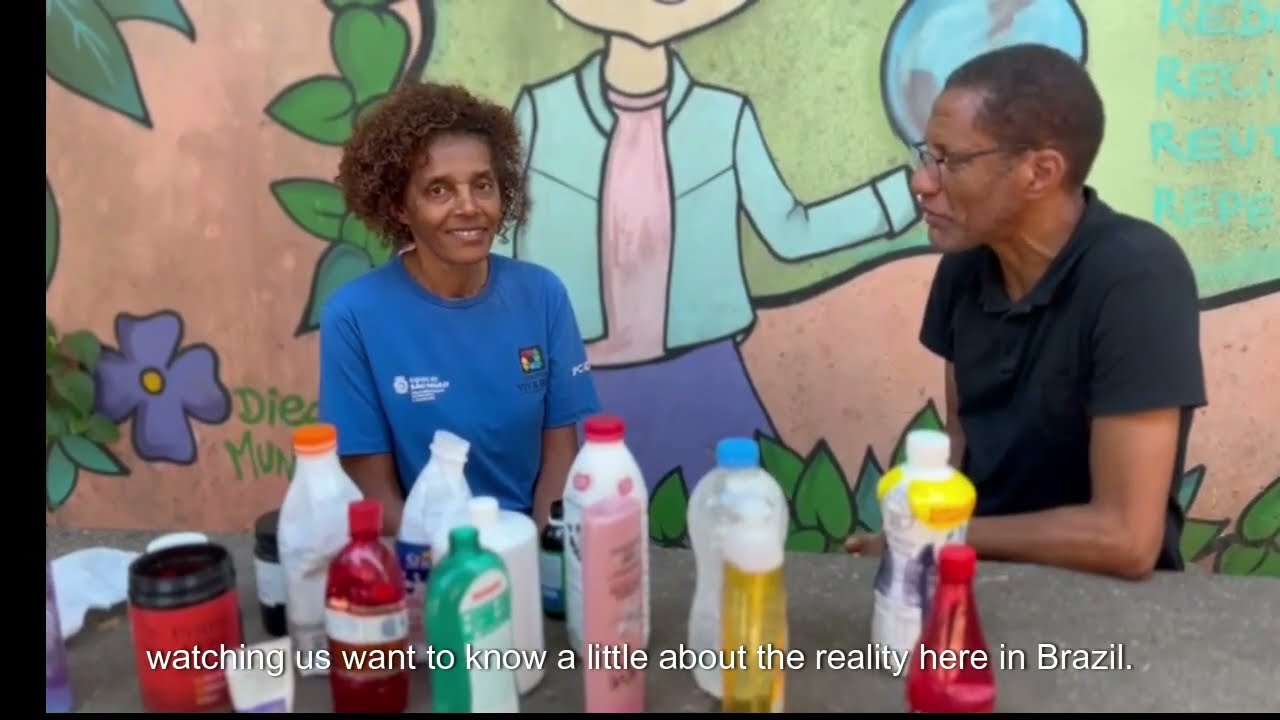
Problem Plastics - Cooper Viva Bem Waste Cooperative
Team

Project Lead
Professor Rosalind Malcolm
Professor of Law, Co-Director of Surrey Centre for International and Environmental Law
Biography
I am an environmental lawyer and I specialise in looking at the ways law can be used to protect the environment. Recently I have been working on the 'wicked problem' of the polluting waste from plastics and how a circular economy might help to stop the problem of waste. So I look at laws around the ecodesign of products and how they can be implemented to stop the production of waste and pollution. I look at the whole governance frameworks for environmental law including not just the legislation but policy, implementation, enforcement and compliance as well as the impact of property rights. I have been working on the rights to water and sanitation and how they can be used to ensure a decent standard of living for people especially in developing countries. I believe that we will not solve the problem of the degradation of the earth unless we work across disciplines seeking solutions together so I specialise in multidisciplinary research working with social and natural scientists and engineers.
I am Co-Director of the Surrey Centre for International and Environmental Law, a research grouping of individuals and organisations engaged in research, teaching and consultancy into environmental regulation, compliance and enforcement. I also co-direct the Governing Plastics Network jointly with the University of Nairobi, Kenya.
I am a Fellow of the Institute for Sustainability at the University of Surrey and I also practice as a barrister from Guildford Chambers.

Project Manager
Dr Matthew Peacock
Research Fellow
Biography
My first degree was in English Literature followed by a conversion degree in Psychology, leading to MScs in Research Methods and Applied Social Psychology and eventually a PhD focused on the Psychology of creative processes. I have since been building experience in research work, specialising in qualitative research methods and investigating topics as diverse as Food Labelling, Responsible Research and Innovation, ethics in social care, adoption of mobile health devices and marine plastic pollution.
My current focus is on collaborating with researchers in Brazil to ensure the needs and voices of marginalised communities in developing nations who are at risk from plastic pollution are reflected in the plastic governance that emerges in the wake of the UN Global Plastics Treaty negotiations. To that endl I have been serving as Lead Researcher on the project “Providing climate justice for marginalised groups in the implementation of the UN Global Plastics Treaty in Brazil”, which conducted successful workshops in both the UK and Brazil, bringing together diverse stakeholders including members of the government and NGO’s with representatives of marginalised communities.
I am currently working on translating these findings into an online learning module aimed at raising awareness of the global impacts of plastic related behaviours and policy making on marginalised communities across the world.
Latest Research outputs
Peacock, M., Ghilardi-Lopes, N. P., Turra, A., Rech, T. F., Kawabe, L. A., Gatersleben, B., & Wyles, K. J. (2025). The future of citizen science for marine litter research: What are the benefits to be realised and the challenges to be overcome?. Marine pollution bulletin, 117914.
Peacock, M., Winton, S. and Malcolm, R. (2025). Video presentation: Introduction to plastic pollution and climate change nexus – International Perspectives. Presented at stakeholder workshop 17th June, 2025 and featured on Governing Plastics Network website: Providing climate justice for marginalised groups in the implementation of the UN Global Plastics Treaty in Brazil | University of Surrey

Sao Paulo Team Lead
Professor Sylmara Gonçalves Dias
Professora Associada, University of Sao Paulo

Research Fellow
Dr Carla Elliff
Postdoctoral Researcher, University of Sao Paulo

Research Fellow
Dr Isabela Ribeiro B. de Carvalho
Postdoctoral Researcher

Researcher
Samuel Winton
PhD student
UN Sustainable Development Goals
