
New carbon trading model could cut electricity costs while the Philippines reaches net-zero power
Carbon trading revenues could exceed $40 billion annually by 2050 whilst helping the Philippines achieve net-zero emissions in its power sector, according to new research from the University of Surrey.

The study models two pathways for the Philippines' Luzon power grid to reach net-zero emissions by 2054. Researchers explain that both paths show that revenues from carbon trading markets would more than cover the costs of deploying renewable energy and emissions reduction technologies, potentially lowering electricity bills for Filipino consumers and businesses.
The Philippines currently has the highest electricity costs in Southeast Asia, averaging $187.60 million per terawatt-hour in 2023. High energy costs hinder business competitiveness and deepen poverty, particularly affecting small enterprises and low-income households.

The research team used an in-house developed, open-source software DECO2 to model the Luzon grid, which generates 72% of the Philippines' electricity. They compared two scenarios – one relying primarily on renewable energy expansion, and another that also includes carbon capture and storage in existing fossil fuel plants from 2035 onwards.
The second scenario achieved lower electricity prices, reduced cumulative emissions by 184 million tonnes of CO2, and required half the generation expansion of the first scenario. It also aligned more closely with the Philippines' renewable energy targets, reaching 65-70% renewable share by 2054. However, the feasibility of geological storage of CO2 in the Philippines needs additional study due to the region’s high tectonic activity.

Notes to editors
- The research paper "Optimal transition pathways to a net-zero power grid in the Philippines" by Gul Hameed, Michael Wu, Xin Hui Cheng, Dominic C.Y. Foo, Raymond R. Tan and Michael Short is published in Energy Strategy Reviews, Volume 62, 2025, Article 101893. DOI: https://doi.org/10.1016/j.esr.2025.101893.
- The study was funded by the South Asia Research Hub, Foreign, Commonwealth & Development Office (FCDO), Government of United Kingdom, and the International Science Partnerships Fund (ISPF) Institutional Support Grant from Research England.
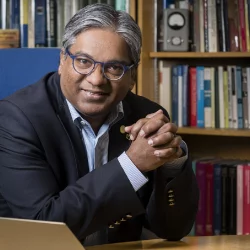
- Dr Michael Short is available for interview upon request.
Featured Academics
Media Contacts
External Communications and PR team
Phone: +44 (0)1483 684380 / 688914 / 684378
Email: mediarelations@surrey.ac.uk
Out of hours: +44 (0)7773 479911