

Seminars
Our group regularly invites speakers from various universities around the world. Their seminars include fundamental, mathematical, and practical aspects.
These meetings offer a point of contact for everyone devoted to quantum research, and the participation of early career researchers is particularly encouraged.
Upcoming seminars
Entropy spectroscopy of a tunable two-site Hubbard molecule

14 October 2026, 39AA04, 12:00
Speaker: Choi Hyoungsoon (Department of Physics, KAIST, South Korea)
Abstract: Entropy counts the microscopic states a system can thermally occupy, making it a direct probe of degeneracy and low-lying excitations that transport often misses. In mesoscopic devices it can be measured without calorimetry, through a Maxwell relation linking entropy to the temperature dependence of charge occupation. Extending this single-dot method to coupled dots is not straightforward: with two charge degrees of freedom, the occupation combination demanded by thermodynamics generally differs from what a single charge sensor reads out.
I will present a protocol that resolves this mismatch and apply it to a GaAs double quantum dot operated as a minimal two-site Hubbard molecule. Shifting both dot levels together at fixed detuning reduces the Maxwell relation to one involving only the total occupation, which a single sensor measures directly. With interdot tunneling tunable from below to well above the thermal energy, we follow the entropy from two nearly independent dots, through hybridized molecular states, to a merged single dot. The entropy tracks the suppression of antibonding states in the one-electron sector and the competing singlet and triplet contributions in the two-electron sector, in quantitative agreement with a two-site Hubbard model.
Please refer on arxiv : https://arxiv.org/abs/2609.17818
Latest seminars
Progress in Josephson Junctions for Classical and Quantum Applications

5 June 2026
Speaker: Martin Weides (University of Glasgow)
Abstract: Superconducting Josephson junctions form the foundation of both classical superconducting electronics and leading quantum computing platforms. Over the past two decades, superconducting qubits have achieved remarkable progress in coherence, control, and scalability, enabling increasingly complex quantum processors. However, a fundamental limitation remains: the requirement for deep cryogenic operation, which constrains system complexity, cost, and practical scalability.
A promising route to overcoming these limitations lies in the use of high-gap superconductors and advanced multilayer device architectures. In particular, niobium-based technologies offer intrinsic advantages due to their larger superconducting gap, enabling operation at higher characteristic frequencies and providing greater resilience against thermal excitations. These properties open opportunities for faster qubit operation, improved control bandwidth, and relaxed constraints on cryogenic infrastructure. At the same time, multilayer structures introduce additional degrees of freedom for engineering device properties through controlled interfaces, proximity effects, and tailored electromagnetic environments.
Recent experimental work has highlighted the importance of multilayer superconducting systems in shaping Josephson junction behavior, particularly in nanoscale geometries where interface effects and material composition play a dominant role. However, the design and optimization of such devices remain challenging. Conventional modeling approaches typically rely on simplified geometries or limited material descriptions, restricting their ability to capture the full complexity of realistic multilayer architectures.
In this work, we address this challenge by combining a three-dimensional numerical modeling framework with experimental investigations of multilayer superconducting devices. This approach enables quantitative prediction of key junction properties while maintaining direct relevance to fabricated structures. Building on this capability, we demonstrate trilayer niobium-based superconducting qubits exhibiting coherent operation at elevated temperatures, highlighting the potential of multilayer, high-gap superconducting platforms to move beyond conventional operating regimes.
References:
- Classical interfaces for controlling cryogenic quantum computing technologies, Brennan et al., APL Quantum 2, 041501 (2025)
- From macroscopic quantum circuits to scalable quantum systems, Zhao et al., Europhysics News 57 (1), 12-15 (2026)
- Modeling realistic multilayer devices for superconducting quantum electronic circuits, Colletta et al., Appl. Phys. Lett. 126, 142601 (2025)
- Gap Engineered Superconducting Multilayer Nanobridge Josephson Junctions, Colletta et al., arXiv:2603.20757 (2026)
Modelling open quantum systems that are strongly coupled to their environment with tensor networks

13 May 2026
Speaker: Brendon Lovett (University of St Andrews)
Abstract: In order to model realistic quantum devices it is necessary to simulate quantum systems strongly coupled to their environment. To date, most understanding of open quantum systems is restricted either to weak system-bath couplings, or to special cases where specific numerical techniques become effective.
I will present a general and yet exact numerical method to calculate the dynamics of an open quantum system strongly coupled to an environment. The method involves expressing the equations of motion for such an open quantum system as a tensor network [1]. In fact, the structure of this network is such that the environment parts can be pre-contracted efficiently, independent of the system Hamiltonian [2]. This so-called process tensor matrix product operator (PT-MPO) approach enables the calculation of dynamics for different time-dependent system Hamiltonians and allows the efficient calculation of any system multi-time correlation function.
I will show that such an approach enables us to optimize a control pulse for creating excitons in quantum dots [3], before going on to show how to combine it with standard tensor network methods to treat a chain of coupled systems interacting with independent environments [4]. I will also discuss how the non-additive properties of multiple environments are exposed using this technique [5].
Finally, I will present recent work on using PT-MPO to model [6] two-dimensional electronic spectroscopy, which is a technique used to measure coherent energy transport in molecular systems. We are also able to extract the ‘coupling mode’ spectral density of the bath [7].
Our codes are publicly available [8] and we would be happy to support colleagues who would like to try them out on other problems.
[1] A. Strathearn, P. Kirton, D. Kilda, J. Keeling, and B. W. Lovett. Efficient non-Markovian quantum dynamics using time-evolving matrix product operators, Nature Communications 9 3322 (2018).
[2] Exploiting the causal tensor network structure of quantum processes to efficiently simulate non-Markovian path integrals, M. R. Jørgensen and F. A. Pollock, Phys. Rev. Lett. 123 240602 (2019).
[3] G. E. Fux, E. Butler, P. R. Eastham, B. W. Lovett and J. Keeling, Efficient exploration of Hamiltonian parameter space for optimal control of non-Markovian open quantum systems Phys. Rev. Lett. 126 200401 (2021).
[4] Thermalization of a spin chain strongly coupled to its environment G. E. Fux, D. Kilda, B. W. Lovett and J. Keeling, Phys. Rev. Research 5 033078 (2023).
[5] Exact dynamics of non-additive environments in non-Markovian open quantum systems, D. Gribben, D. M. Rouse, J. Iles-Smith, A. Strathearn, H. Maguire, P. Kirton, A. Nazir, E. M. Gauger and B. W. Lovett, Physical Review X Quantum 3 010321 (2022)
[6] Process tensor approaches to modeling two-dimensional spectroscopy, R. de Wit, J. Keeling, B. W. Lovett and A. W. Chin, Phys. Rev. Research 7 013209 (2025).
[7] Extracting Coupling-Mode Spectral Densities with Two-Dimensional Electronic Spectroscopy, R. de Wit, J. Keeling, B. W. Lovett and A. W. Chin, arXiv:2503:21685, J. Phys. Chem. Lett. in press (2025).
[8] OQuPy - Open Quantum Systems in Python, oqupy.readthedocs.io
Exploring the quantum-to-semiclassical transition in the Rabi model

25 March 2026
Speaker: Elinor Twyeffort (University of Southampton)
Abstract: A driven two-level system undergoes dramatically different dynamics when the classical drive is replaced by an interaction with the most classical of quantum field states, a coherent state. This apparent lack of quantum-to-classical correspondence even in the limit of large photon numbers has been a long-standing puzzle in quantum optics. A recently developed formalism allows the semiclassical Rabi model to be derived directly from the corresponding quantum Hamiltonian [1]. This approach emphasises that vanishingly small single-photon coupling is the key ingredient for the semiclassical limit, combined with a large displacement of the field in phase space. Not only does this neatly resolve the correspondence issue, it also provides a mathematical framework for studying the transition to the semiclassical limit. To calculate quantum field corrections to the semiclassical dynamics, we introduce a technique called ‘quantum-corrected Floquet dynamics’ [2]. The first-order corrections to the state vector of the coupled quantum system can be solved analytically for arbitrary initial field states, providing a powerful yet surprisingly simple and physically insightful method for calculating short-time dynamics.
[1] E.K. Twyeffort Irish and A.D. Armour, “Defining the semiclassical limit of the quantum Rabi Hamiltonian”, Phys. Rev. Lett. 129, 183603 (2022).
[2] E.K. Twyeffort and A.D. Armour, “Quantum-corrected Floquet dynamics in the Rabi model”, arXiv:2506.17034 (2025).
Unitary, Positive Higher Derivative QFTs from Hidden Ghost Parity

19 February 2026
Speaker: Neil Turok (Perimeter Institute & University of Edinburgh)
Abstract: Ostrogradsky’s 1850 “no-go theorem” has long been taken to imply that higher derivative field theories cannot be consistently quantized. We show that, on the contrary, careful quantization of a renormalizable, four-derivative theory, the perfect square “dipole ghost," shows it is causal and unitary, with positive transition probabilities, to all orders in perturbation theory. Covariant quantization requires us to work in a pseudo-Hilbert space and to generalise the Born rule and LSZ prescription. The interacting dipole ghost is interesting in its own right because it might a) explain the observed large scale structures in the universe, b) cancel stress-energy divergences in the Standard Model and help to resolve the Big bang singularity and c) provide a UV-complete description of the conformally flat limit of quantum gravity.
Secondary Invariants, trace relations and fermions

17 February 2026
Speaker: Robert de Mello Koch (Huzhou University)
Abstract: We argue that the space of invariants of multi-matrix model quantum mechanics, at finite N, is generated by a set of invariants, naturally divided into two distinct classes: primary and secondary. The primary invariants act freely, while secondary invariants satisfy quadratic relations. We argue that the primary invariants correspond to perturbative degrees of freedom, whereas the secondary invariants emerge as non-trivial background structures. The number of primary invariants for a model with d matrices is given by 1+(d-1)N^2. The number of secondary invariants grows as exp(cN^2) at large , with c a constant. Finally, we identify a class of light single-trace operators that behave like free creation operators at low energy but saturate beyond a critical excitation level, ceasing to generate new states. This leads to a dramatic truncation of the high-energy spectrum of the emergent theory. The resulting number of independent degrees of freedom is far smaller than naïve semiclassical expectations, providing a concrete mechanism for how nonperturbative constraints shape the ultraviolet behaviour of emergent theories. Finally we argue that for bosonic vector models the set of bosonic secondary invariants are mapped, one-to-one, to the states of a fermionic bilinear color-singlet Hilbert space. We describe how the trace relations in the two descriptions are related.
Past seminars
2025
13 October 2025
Speaker: Eytan Grosfeld (Ben-Gurion University)
Abstract: The Bose–Hubbard model is a cornerstone of quantum many-body physics, capturing the interplay between kinetic energy and interactions in lattice boson systems. In equilibrium, effective field-theoretical approaches highlight the role of Berry-phase–like terms and reveal the nature of collective excitations across the superfluid–Mott transition. I will first review these equilibrium insights. I will then turn to discuss a minimal Bose–Hubbard model under a chiral drive implemented by light carrying finite orbital angular momentum. This Floquet-type drive introduces a new control knob — chirality — that qualitatively reshapes the phase diagram. Strikingly, the system evolves toward non-trivial driven-dissipative steady states that exhibit quantum-chaotic dynamics. Together, these two threads bridge insights from equilibrium field theory with the physics of Floquet-driven steady states, giving insights into the structure of the collective excitations and showing how light can be used to engineer, destabilize, and ultimately control complex quantum phases. Experimental platforms ranging from cold atoms to polariton condensates and superconducting circuits offer promising routes for realizing these ideas.
1 October 2025
Speaker: Raymond Kapral (University of Toronto)
Abstract: A microscopic description of the quantum dynamics of small quantum systems thar are subjected to automatous driving and coupled to large quantum reservoirs will be given. A statistical mechanical formulation that allows one to compute the exact nonequilibrium average values of quantum operators in terms of local density operators obtained by maximizing an entropy functional subject to constraints is used to study such systems.
In this context, the local density operator for the full quantum system, small subsystem plus reservoirs, is characterized by a space and time dependent temperature field. Analysis of the internal energy of the subsystem yields the first law of thermodynamics, including microscopic expressions for the work and heat.
The results are illustrated by studying the nonequilibrium heat flux in a small quantum system coupled to two reservoirs at different temperatures. Finally, an analogous model shows how quantum reactive systems respond when coupled to two reservoirs with different chemical potentials.
17 September 2025
Speaker: Giulia Rubino (University of Bristol)
Abstract: Microscopic physical laws are time-symmetric, hence, a priori there exists no preferential temporal direction. However, the second law of thermodynamics allows one to associate the “forward” temporal direction to a positive variation of the total entropy produced in a thermodynamic process, and a negative variation with its “time-reversal” counterpart.
This definition of a temporal axis is normally considered to apply in both classical and quantum contexts. Yet, quantum physics admits also superpositions between forward and time-reversal processes, whereby the thermodynamic arrow of time becomes quantum-mechanically undefined.
In this talk, I will demonstrate that a definite thermodynamic time’s arrow can be restored by a quantum measurement of entropy production, which effectively projects such superpositions onto the forward (time-reversal) time-direction when large positive (negative) values are measured.
Furthermore, for small values (of the order of plus or minus one), the amplitudes of forward and time-reversal processes can interfere, giving rise to entropy-production distributions featuring a more or less reversible process than either of the two components individually, or any classical mixture thereof.
17 July 2025
Speaker: Matthew Leifer (Chapman University)
Abstract: Richard Feynman said that quantum interference “is impossible, absolutely impossible, to explain in any classical way”. Many quantum physicists have followed suit, arguing that interference is the central mystery of quantum mechanics.
In this talk, I will describe an unmysterious toy-model for a Mach-Zehnder interferometer that can reproduce those aspects of quantum interference that have been Traditionally Regarded As Problematic (TRAP). Moving beyond the TRAP, I show that more subtle aspects of quantum interference, such as wave particle duality relations and Zeno-based interaction-free measurement, cannot be reproduced in this way, as they require a form of nonclassicality called contextuality.
2024
23 May 2024
Speaker: Michael Stern (Bar-Ilan University).
Abstract: The realisation of a quantum computer represents a tremendous scientific and technological challenge due to the extreme fragility of quantum information. The physical support of information, namely the quantum bit or qubit, must at the same time be strongly coupled to other qubits by gates to compute information, and well decoupled from its environment to keep its quantum behaviour.
An interesting physical system for realising such qubits are magnetic impurities in semiconductors, such as bismuth spins in silicon. Indeed, spins in semiconductors can reach extremely long coherence times - of the order of seconds. Yet it is extremely difficult to establish and control efficient gates between distant spins.
Here we experimentally demonstrate a protocol where single spins can coherently transfer their quantum information to a superconducting device, which acts as a mediator or quantum bus. This superconducting device allows to connect distant spins on-demand without compromising their coherent behaviour.
16 May 2024
Speaker: Hannah Stern (University of Manchester).
Abstract: Solid-state spin-photon interfaces that combine single-photon generation and long-lived spin coherence with scalable device integration, ideally at ambient conditions, hold great promise for the implementation of quantum networks and sensors. Despite rapid progress reported across several candidate systems, those possessing quantum coherent single spins at room temperature remain extremely rare.
In this talk, I will show quantum coherent control under ambient conditions of a single-photon emitting defect spin in a layered van der Waals material, hexagonal boron nitride. We identify that the carbon-related defect has a spin-triplet electronic ground-state manifold and demonstrate that the spin coherence is governed predominantly by coupling to only a few proximal nuclei and is prolonged by decoupling protocols.
These results serve to introduce a new platform to realise a room-temperature spin qubit coupled to a multi-qubit quantum register or quantum sensor with nanoscale sample proximity.
9 May 2024
Speaker: Jonas Glatthard (University of Nottingham).
Abstract: The entanglement entropy of a black hole and that of its Hawking radiation are expected to follow the so-called Page curve: After an increase in line with Hawking’s calculation, it is expected to decrease back to zero once the black hole has fully evaporated, as demanded by unitarity.
Recently, a simple system-plus-bath model has been proposed which shows a similar behaviour. Here, we make a general argument as to why such a page-curve-like entanglement dynamics should be expected to hold generally for system-plus-bath models at small coupling and low temperatures, when the system is initialized in a pure state far from equilibrium.
The interaction with the bath will then generate entanglement entropy, but it eventually has to decrease to the value prescribed by the corresponding mean-force Gibbs state. Under those conditions, it is close to the system ground state. We illustrate this on two paradigmatic open-quantum-system models, the exactly solvable harmonic quantum Brownian motion and the spin-boson model, which we study numerically.
In the first example we find that the intermediate entropy of an initially localized impurity is higher for more localized initial states. In the second example, for an impurity initialized in the excited state, the Page time—when the entropy reaches its maximum—occurs when the excitation has half decayed.
29 February 2024
Speaker: Gloria Patero (Materials Science Institute of Madrid (CSIC)).
Abstract: The fabrication and control of semiconductor quantum dot arrays open the possibility to use these systems as quantum links, for transferring quantum information between distant sites, an indispensable part of large-scale quantum information processing.
Great effort is currently being devoted to the investigation of hole spin qubits in quantum dots owing to their long coherence time resulting from the weak hyperfine coupling to nuclear spins and rapid operation time due to the inherently strong spin–orbit coupling (SOC).
In this talk I will discuss different protocols, both adiabatic and those based on shortcuts to adiabaticity, to transfer spin holes directly between edges of a quantum dot chain with high fidelity. I will show how the spin polarization of the transferred holes can be controlled by tuning the ratio between the SOC and the spin conserving tunneling rate. Also, I will discuss how to transfer entangled hole spins between edge dots and the feasibility of quantum dot arrays as high-fidelity quantum buses to distribute information between distant sites and perform one qubit gates in parallel.
Recently, quantum dot arrays have been proposed as quantum simulators of complex lattices, as those which present non trivial topology. An alternative way to transfer directly information between distant sites with high fidelity, is to use protected topological edge states in systems with non-trivial topology. I will discuss particle transfer mediated by edge states in different quantum dot array configurations which present edge states protected against certain type of disorder. It opens a new avenue for quantum state transfer protocols in low dimensional topological lattices.
22 February 2024
Speaker: Micheline Soley (University of Wisconsin-Madison).
Abstract: Today, exact quantum dynamics simulations face the “curse of dimensionality,” in which computational cost grows exponentially as the dimensionality of molecular systems increases. This limits exact grid-based quantum dynamics simulations to the smallest molecular systems. Low-rank tensor-network approaches provide a way to surmount this curse for many chemical systems, as they can exponentially reduce computational cost for weakly coupled molecular systems.
Our work capitalises on the native advantages of tensor networks and the high degree of entanglement possible on quantum computers to develop new approaches to simulate molecular systems. In addition, we demonstrate that reflectionless scattering mode theory from optics can be reformulated in quantum mechanics to reveal the existence of long-sought-after quantum mechanical parity-time reversal (PT) symmetry behavior in standard ultracold-atom scattering experiments, a discovery which opens the door to the development of powerful quantum technologies.
18 January 2024
Speaker: Alistair Nun (Guy Foundation).
Abstract: It can be said that in trying to understand steam engines, thermodynamics was born and in trying to comprehend light, and the Universe, quantum mechanics was developed. Although many think these fields are the domains of physicists and mathematicians, it has long been realised that they must also explain how life works, which means that they must overlap with biology, and at some level, help to explain the “hard questions”, such as the origins of life, ageing and disease, consciousness and are we alone in the Universe.
Indeed, it could even be said, somewhat counter-intuitively, that biology may provide us with a deeper understanding of quantum mechanics and thermodynamics. However, despite a (slow) rise in interest in the field of “quantum biology”, many biologists and physicists are still wary about dipping their toes into these apparently scary different worlds with often totally alien languages.
As is often the case, a common challenge can sometimes bring different folk together, even if they originally didn’t see the commonality. One approach could well be medicine, which although it has made great progress, is still limited as there are still big holes in our understanding. However, medicine itself also often makes big strides when it is faced with a particular challenge, such as was faced hundreds of years ago when sailing ships began exploring the globe. The crews often got very ill; it was soon realised that a healthy diet, and when visiting different countries, local remedies could make a big difference.
Today, we may be facing something similar as humankind, and our associated organisms, explore space. Astronauts, and cosmonauts, appear to be developing an accelerated ageing phenotype; this could become a big issue on longer space missions, say, to Mars.
In this talk, I explore the potential of both thermodynamics and quantum mechanics at a very basic level (no equations!), in helping us understand why this may be happening, in particular, why starting from the origins of life may provide insight, and how the mitochondrion, the ancestor of the earliest forms of life, could be a good “canary in the (metabolic) coal mine”. A key tenet to hold here is that life is electrical.
2023

13 November 2023
Speaker: Robson Christie (Imperial College London).
Abstract: I will present results from a collaborative research project focused on the study of rare transitions in Markovian open quantum systems driven by Gaussian noise.
Our approach utilises a probability measure on the space of quantum trajectories and transition path sampling methods to provide insights into various transition mechanisms at different timescales and the calculation of the associated rates. As an example, we consider a Caldeira Leggett derived model of quantum Brownian motion, though it should be noted that these methods are applicable to any systems described by stochastic Schrödinger equations.
2022
17 February 2022
Speaker: Giovanni Manfredi (IPCMS Strasbourg).
Abstract: We propose a method to construct a classical analog of an open quantum system, namely a single quantum particle confined in a potential well and immersed in a thermal bath. The classical analog is made out of a collection of identical wells where classical particles are trapped.
The distribution of the classical positions is used to reconstruct the quantum Bohm potential, which in turn acts on the shape of the potential wells. As a result, the classical particles experience an effective "quantum" force. This protocol is tested with numerical simulations using single- and double-well potentials, evidencing typical quantum effects such as long-lasting correlations and quantum tunneling. For harmonic confinement, the analogy is implemented experimentally using micron-sized dielectric beads optically trapped by a laser beam.
2021
24 November 2021
Speaker: Janet Anders (University of Exeter).
Abstract: In this talk I will discuss how a system+bath Hamiltonian, similar to the Caldeira-Leggett and spin-boson models, can be used to derive a general spin dynamics equation. I will show how in the Ohmic (Markovian) limit the new equation reduces to the Landau Lifshitz Gilbert equation, a phenomenological equation widely used in magnetism.
I will demonstrate how resonant Lorentzian couplings can be used as a general tool for the systematic comparison of spin dynamics of Markovian and non-Markovian regimes, and present numerical results of a classical spin's dynamics under classical and quantum noise. We find much quicker decay to steady state for couplings that invoke memory effects, and quantum flattening of the magnetization curve at low temperatures.
In the second part of the talk we will explore long time steady states. The dynamical convergence to the Gibbs state is a standard assumption across much of classical and quantum thermodynamics. However, for nanoscale and quantum systems the interaction with their environment becomes non-negligible. Is the system steady state then still the Gibbs state? And if not, how exactly does it depend on the interaction details? I will briefly outline several aspects of this timely topic.
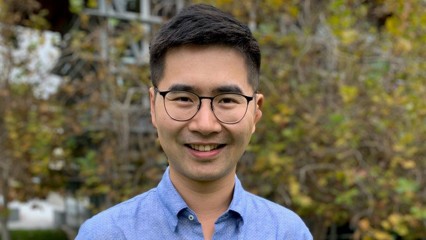
20 Oct 2021
Speaker: Eddy Chen (UC San Diego).
Abstract: A strongly deterministic theory of physics is one that permits exactly one possible history of the universe. In the words of Penrose (1990), "it is not just a matter of the future being determined by the past; the entire history of the universe is fixed, according to some precise mathematical scheme, for all time.” Such an extraordinary feature, at first glance, may appear difficult to achieve in physics.
In this talk, I first clarify the meaning of strong determinism and explain how it differs from standard determinism and superdeterminism. Next, I show that Everettian quantum mechanics, with the help of the Past Hypothesis, provides an easy route to strong determinism.
On a theory that I call the Everettian Wentaculus, the quantum state of the multiverse is a fundamental mixed state with exactly one possible history. As a consequence of physical laws, the history of the multiverse could not have been otherwise. Since the theory postulates no fundamental measures of probability or typicality, any such notions will have to be “emergent.”
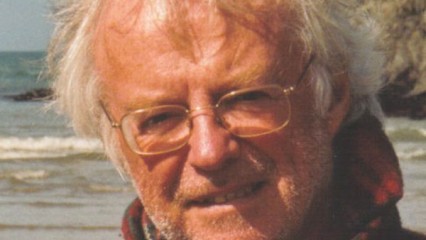
15 Sept 2021
Speaker: Nicholas Maxwell (Science and Technology Studies, UCL).
Abstract: I will discuss the overwhelming case for conceiving, and doing, physics within the framework of aim-oriented empiricism – and its implications for discovery, for quantum theory, for the role of metaphysics and philosophy of physics within physics.

14 July 2021
Speaker: Chiara Marletto (University of Oxford).
Abstract: The theory of quantum computation has brought us rapid technological developments, together with remarkable improvements in how we understand quantum theory. I will describe the foundations of a programme to extend the quantum theory of computation beyond quantum theory itself, based on the recently proposed constructor theory, and explain a recent application of this new approach to the problem of testing quantum effects in gravity.
2020
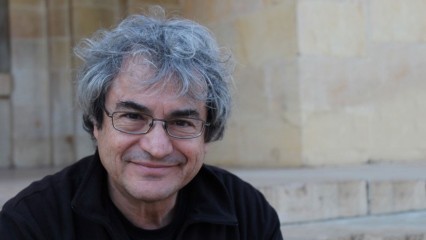
16 December 2020
Speaker: Carlo Rovelli (University of Marseille).
Abstract: An intuitive and compelling interpretation of quantum mechanics talk from one of the world’s best-known figures in theoretical physics, Carlo Rovelli.
9 December 2020
Speaker: Jim Baggott
Abstract: A non-technical introductory overview of the meaning of quantum mechanics from the perspective of the philosophy of science lead by freelance science writer Jim Baggott.
18 November 2020
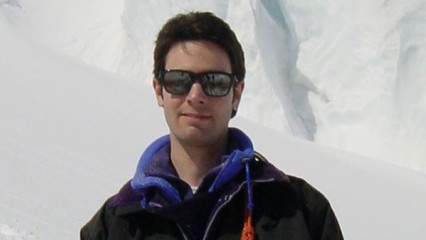
Speaker: Dorje Brody (University of Surrey).
Abstract: The manifold of pure quantum states — the quantum “phase” space — can be regarded as a complex projective space endowed with the unitary-invariant Fubini-Study metric. According to the principles of geometric quantum mechanics, the physical characteristics of a given quantum system can be represented by geometrical features that are preferentially identified in this complex manifold.
What might come as a surprise is that the phase space of (classical) relativistic mechanics — the future tube — carries structures that are almost identical to those of quantum phase space. This observation leads to a new way of formulating relativistic mechanics, and relativistic quantum theory of space-time events.
In the first half of this talk I will review some of the ideas on geometric formulation of basic quantum theory. In the second half I will illustrate how essentially identical structures emerge in relativistic mechanics, and based on this show how measurement theory for relativistic quantum mechanics — a theory that has hitherto missing in the literature — can be formulated. (Talk based on joint work with L.P. Hughston.)
4 November 2020
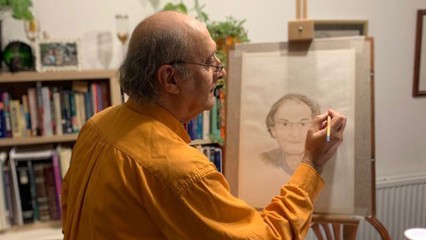
Speaker: Mohammed Sanduk (University of Surrey).
Abstract: A seminar on a project that goes back 30 years trying to find a deeper interpretation of the quantum mechanical wave function.
21 October 2020
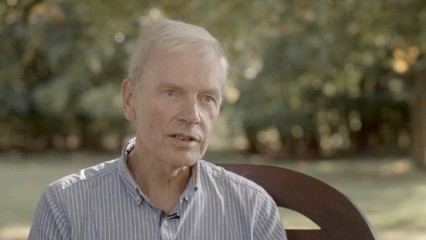
Speaker: Chris Dewdney (University of Portsmouth).
Abstract: This seminar covered the Bohmian interpretation of quantum mechanics.
5 October 2020
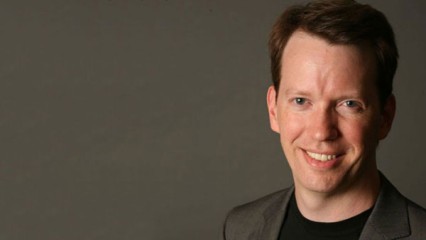
Speaker: Sean Carroll (Caltech).
Abstract: Quantum mechanics is a theory of wave functions in Hilbert space. Many features that we generally take for granted when we use quantum mechanics -- classical spacetime, locality, the system/environment split, collapse/branching, preferred observables, the Born rule for probabilities -- should in principle be derivable from the basic ingredients of the quantum state and the Hamiltonian. I will discuss recent progress on these problems, including consequences for quantum gravity and emergent spacetime.