
Monday 12 July - Friday 16 July 2027
UK-China International Particle Technology Forum XI (PTF11)
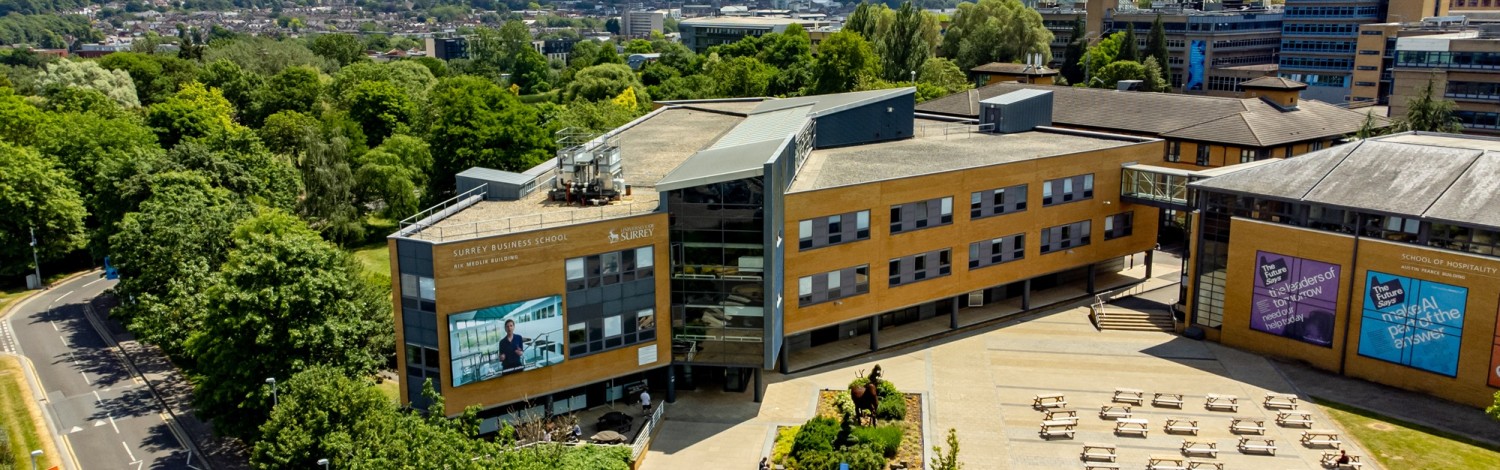
Stag Hill campus
University of Surrey
Guildford
Surrey
GU2 7XH
Background
We are delighted to announce the 11th UK-China International Particle Technology Forum (PTF11), continuing a prestigious biennial series that began in Leeds, UK, in 2007. Established to bridge the scientific communities of the United Kingdom and China, the PTF has grown into a globally recognised platform dedicated to advancing the field of particle science and technology.
Following the success of the recent forums, including PTF9 in Greenwich, UK (2023) and PTF10 in Xi'an, China (2025), PTF11 will be hosted at the University of Surrey, UK. This forum upholds the core mission of the series: to foster high-level academic and industrial dialogue, showcase the latest research breakthroughs, and catalyse substantive collaboration among the UK, China, and beyond. Over the last two decades, the PTF has successfully facilitated knowledge exchange, identified future research directions, and built a strong, interconnected community of scientists and engineers.
PTF11 continues this legacy, aiming to strengthen these vital international ties and drive innovation that addresses some of the world's most pressing challenges.
Scope of the forum
The primary focus of PTF11 is to integrate diverse perspectives in particle science and technology to achieve a more profound, fundamental understanding of particulate systems. The forum will emphasise the critical role of particle technology in enabling a sustainable and healthy future, with particular attention to applications in clean energy, environmental protection, personal care and advanced healthcare.
We welcome contributions on all aspects of particle science and technology. The topics of interest include, but are not limited to:
- Synthesis and crystallisation
- Characterisation and measurement
- Modelling and simulation
- Processing and handling
- Nanoparticle technology
- Battery technology and energy storage
- Aerosol science and technology
- Pharmaceutical particle technology
- AI in particle technology
- Multiphase flow.
Contributions that demonstrate applications in environmental science, energy storage and conversion (e.g., batteries, carbon capture), and emerging industrial applications in the food, pharmaceutical, chemical, and advanced materials sectors are especially encouraged.
Conference chairs

Chair
Professor Charley Wu
Professor of Chemical Engineering
Biography
Prof. Chuan-Yu (Charley) Wu is a professor in Chemical Engineering at the Department of Chemical and Process Engineering and the coordinator of the Unilever-IPE-Surrey collaborative doctoral training programme in sustainable manufacture, multi-scale modelling, formulation and product engineering. He was also the coordinator of a EU FP7 Initial Training Network (ITN) consortium (€3.8M) on the development of in silico models for roll compaction, which consists of 10 full partners and 4 associate partners from 8 EU countries. He has expertise in discrete element analysis, multiscale modelling and simulations, pharmaceutical engineering, particle technology and granular dynamics. Prof. Wu has been working closely with global pharmaceutical companies over the last 10 years and has run industrial collaborative research projects with Pfizer, AstraZeneca, MSD and Sanofi in developing advanced numerical modelling techniques for pharmaceutical application and established a strong link with the global pharmaceutical industry.
Prof. Wu is currently an executive editor for Powder Technology. He co-authored a monograph on “Particle Technology and Engineering” published by Elsevier and edited two books entitled “Discrete Element Modelling of Particulate Media” and “Particulate Materials: Synthesis, Characterisation, Processing and Modelling” published by RSC publishing. He also edited five journal special issues and published over 100 scientific papers with an H-index of 18. He has given more than 30 invited presentations and seminars at international conferences, global pharmaceutical companies and universities worldwide. Prof. Wu is a member of the advisory and editorial board for “Particuology”, “Acta Pharmaceutica Sinica B (APSB) ” and “Journal of Engineering”.
Prof. Wu is also a grant assessor for ESPRC, Royal Society, European Research Council, French research council (ANR), Canada Research Council, China National Science Foundation and Romania Research Council. He also served as a PhD examiner for the universities of Cambridge, Edinburgh, Birmingham, Leicester, Leeds and Sheffield in the UK, the University of New South Wales and Monash University in Australia, and Abo Akademi University in Finland.
Prof. Wu organized five conferences as the chairman in the fields of particle technology and discrete element modelling (Die compaction and Roll Compaction, 2007; UK-China Particle Technology Forum III, 2009; International Symposium on Discrete Element Modelling, 2012, PARTEC, 2013, Particulate Processing in Pharmaceutical Industry IV, 2014) and is a member of the international advisory and scientific committees for three international conference series (ECI conference on Particulate Processing in Pharmaceutical Industry; UK-China Particle Technology Forum; Coupled Problems).

Co-Chair
Professor Bona Lu
School of Chemical Engineering University of Chinese Academy of Sciences, China

Co-Chair
Professor Yanson Shen
School of Chemical Engineering, University of New South Wales, Australia
Important dates
- 15 January 2027: Abstract submission deadline
- 15 February 2027: Notice of acceptance
- 1 March 2027: Provisional programme
- 15 June 2027: Deadline for registration
- 12-16 July 2027: Conferences.
Abstract submission
Please submit your abstract via Oxford Abstracts.
Publications of the contributions: selected papers will be considered for publication in special issues of peer-reviewed journals, such as Powder Technology, subject to peer review procedures. Those who wish their papers to be published in the special issues are required to submit their full papers by 30 November 2027. Please indicate your intention during your abstract submission.
Registration
- Registration will be open soon
- If you need an invitation letter for attending this conference, please complete the online letter request form.
Programme
- 11 July 2027
- 14:00-18:00: Registration open
- 12 July 2027
- Seville Symposium on Particle Engineering and Technology
- 13 July 2027
- Seville Symposium on Particle Engineering and Technology
- 14 July 2007
- Morning - Plenary Session
- Afternoon - Parallel Thematic Sessions
- 15 July 2007
- Morning - Plenary Session
- Afternoon - Parallel Thematic Sessions
- Evening - Conference Dinner
- 16 July 2027
- Morning - Parallel Thematic Sessions
- Afternoon - Plenary Session
- 17:00 - Closing and farewell.
Confirmed plenary speakers

Professor Xiaotao Bi
Department of Chemical and Biological Engineering University of British Columbia, Canada
Talk title
Measurement of local particle charge densities and flow structure in gas-solids fluidized beds
Biography
Dr. Bi received his BASc (1985) and MASc (1988) from Tsinghua University, and PhD (1994) from the University of British Columbia (UBC). He has been a professor in the Department of Chemical and Biological Engineering at The University of British Columbia since 1997, and served as the Director (2019-2025) of UBC Clean Energy Research Centre (www.cerc.ubc.ca). He is a Fellow of Canadian Academy of Engineering since 2014 and Engineers Canada since 2019.
His research spans from fundamentals of fluidization and fluid-particle systems to industrial applications of fluidized bed reactors, with the current focus on development of fluidized bed reactors for biomass gasification, torrefaction, and catalytic pyrolysis, and integrated assessments of integrated bioenergy systems and biorefineries. He has published 500+ peer-reviewed papers with a Google H-Index of 93. He was the recipient of a number of awards including the AIChE Particle Technology Forum Lectureship Award (2012), CSChE Industrial Practice Award (2020), BC Bioenergy Sector Award (2022), CIESC Thermochemistry Award (2023) and International CFB & Fluidization Achievement Award (2024).
Professor Shuiqing Li
Tsinghua University, China
Talk title
Multi-scale adhesive particle dynamics in multiphysical fields
Biography
Shuiqing Li is a tenured professor at Tsinghua University, National Science Fund for Distinguished Young Scholars. In 2004, he completed his postdoctoral research at Tsinghua University and promoted to professor in 2012 until now. Currently, he serves as the vice dean of the Research Office at Tsinghua University, the Deputy Director of the National Nanoscience Center, and the Director of the Tsinghua University-Dongfang Electric Future Energy and Equipment Joint Research Institute. He holds the position of Deputy Head of the 14th Five-Year Plan on "Coal Clean and Efficient Utilization Technology" of the Ministry of Science and Technology, is a member of the China Society of Engineering Thermophysics and the Deputy Director of the Combustion Division, the Deputy Director of the Aerospace Combustion and Heat Transfer Committee of the Chinese Aeronautical Society, the Co-Chair of the International Combustion Conference, and a member of the editorial board of journals such as Progress in Energy and Combustion Science.
He has delivered invited reports at international academic conferences over 20 times and completed an academic monograph "Adhesive Particle Flow" published by Cambridge University Press. His research focuses on core technologies in areas such as low-carbon flexible combustion, dual-mode chemical/electric propulsion and nano flame synthesis.
To date, he has published over 250 SCI papers in top journals such as Phys. Rev. Lett., Combust. Flame, and J. Fluid. Mech. In 2020, he was elected a Fellow of The Combustion Institute, and in 2025, he received the National Natural Science Award.
Professor Wei Ge
Institute of Process Engineering, China
Talk title
Multi-scale simulation for a world model of granular systems
Biography
Prof. Wei Ge, born in 1970, got his B. Sc. Degree in 1992 and then Ph. D Degree in 1998, both from Harbin Institute of Technology, China. He is a professor at Institute of Process Engineering, Chinese Academy of Sciences, and the director of its Huairou Interdisciplinary Research Center for Mesoscience; He is the chair of Simulation and Modeling Committee of Chemical Industry and Engineering Society of China (CIESC). He serves as editor for Chemical Engineering Science and international advisory board member for Particuology. He proposed pseudo-particle modeling to bridge microscale and macroscale behaviors in multiphase reaction systems, improved the energy-minimization multi-scale model for gas-solid and gas-liquid systems, led the development of the Mole series multiscale supercomputing software and hardware systems and virtual process engineering platforms. He has published over 250 journal papers and co-authored 5 monographs. He received the Distinguished Young Scholar Fund from National Natural Science Foundation of China, awarded the Outstanding Youth in Basic Science from the Zhou Guangzhao Foundation, and received the Hou Debang Chemical Technology Innovation Award from CIESC.
Professor Bona Lu
University of Chinese Academy of Sciences, China
Talk title
From refining to integrated refining-chemicals-mesoscale CFD modeling for catalytic fluidized bed reactor design and optimization
Biography
Bona Lu received her BSc from Zhejiang University in 2003 and PhD from the Institute of Process Engineering (IPE), Chinese Academy of Sciences (CAS) in 2009. She was promoted to Professor at IPE in 2020. In 2025, she was appointed as a Chang Jiang Distinguished Professor by the Ministry of Education and joined the University of CAS as a Tenured Distinguished Professor.
She works on multiphase transport, reaction engineering, multiscale modeling, and reactor optimization in heterogeneous catalysis, and has recently expanded to medical image data mining for neurological disorders and lithium‑battery electrolyte simulation. The gas-solid drag model she developed is embedded in ANSYS FLUENT and Siemens Star‑CCM+. Since 2005, she has closely collaborated with Sinopec RIPP on the coupling of diameter‑transformed fluidized beds (DTFBs) and catalytic reactions, enabling quantitative design and nationwide industrial application. She has authored 70+ papers, 2 monographs, and led 20+ projects. She serves on the organizing committee of the international renowned journal the Innovation, and as advisor/committee member for the CFB conference and the International Forum on Multiphase Flow Technology.
Professor Mojtaba Ghadiri
University of Leeds, UK
Talk title
Triboelectrification of particulate solids – measurement and modelling
Biography
Mojtaba Ghadiri is Professor of Chemical Engineering at the University of Leeds, UK. His research focuses on understanding particulate solids by linking bulk behaviour to single-particle properties and interactions, supported by simulations using the Discrete Element Method (DEM) coupled with Computational Fluid Dynamics (CFD). His application interests include triboelectrification (his talk’s topic), cohesive powder flow and fluidisation, particle size reduction and enlargement, and electrical and environmental phenomena in particulate systems.
Mojtaba is a Fellow of the Royal Academy of Engineering, a Chartered Engineer, and a Fellow of the Institution of Chemical Engineers. His awards include the Geldart Medal (2023), the KONA Award (2019), the Chemistry for Industry Award (2022), and the Iinoya Award (2010). He received the KONA Distinguished Service Award (2014) as Europe and Africa Editor of KONA Powder and Particle Journal. Until July 2019, he served as a consultant to the International Fine Particle Research Institute (IFPRI) on particle size reduction. Further information on current projects, collaborators and publications can be found at: http://ghadiri-group.leeds.ac.uk/.
Professor Omar Matar
Imperial College London, UK
Talk title
Numerical simulations of complex multiphase flows
Biography
Omar Matar FREng, FAPS, FIChemE, is a Professor of Fluid Mechanics, and Dean of the Faculty of Engineering at Imperial College London. His research interests include the use of multi-scale, physics-informed, data-driven methods for the solution of complex non-isothermal multiphase flows with phase change. He has published over 390 papers, with over 16,400 citations, and H-index 70. He is on the editorial boards of the International Journal of Multiphase Flow, Droplet, and Data-Centric Engineering.
Accommodation
The University of Surrey offers various types of guest rooms on both its Stag Hill and Manor Park campuses. Further details can be found on the accommodation website.
In addition, there is a range of hotels available in Guildford. Due to high demand during the busy summer season in July, it is advisable to book as early as possible. You can make reservations using hotel websites or platforms such as Booking.com.
The estimated walking times provided below are from each listed hotel to the conference venue, based on Google Maps.
- Holiday Inn Guildford Hotel ~ 22 minutes
- Harbour Hotel ~ 35 minutes
- Mandolay Hotel ~ 37 minutes
- Travelodge Guildford Hotel ~ 21 minutes
- Asperion Hotel (B&B) ~ 22 minutes
- Angel Posting House ~ 27 minutes
- Premier Inn Hotel ~ 31 minutes.
Exhibition
The venue will allow space for exhibitions in the form of posters and small-scale devices. There will be a very small charge for the use of the exhibition venue. For more information, please contact Prof. Charley Wu.
Sponsors


