
Celebrating 20 years of prostate cancer research at University of Surrey
This year marks 20 years of partnership between local charity, the Prostate Project and the University of Surrey, which has led to advances in prostate cancer research and treatment.
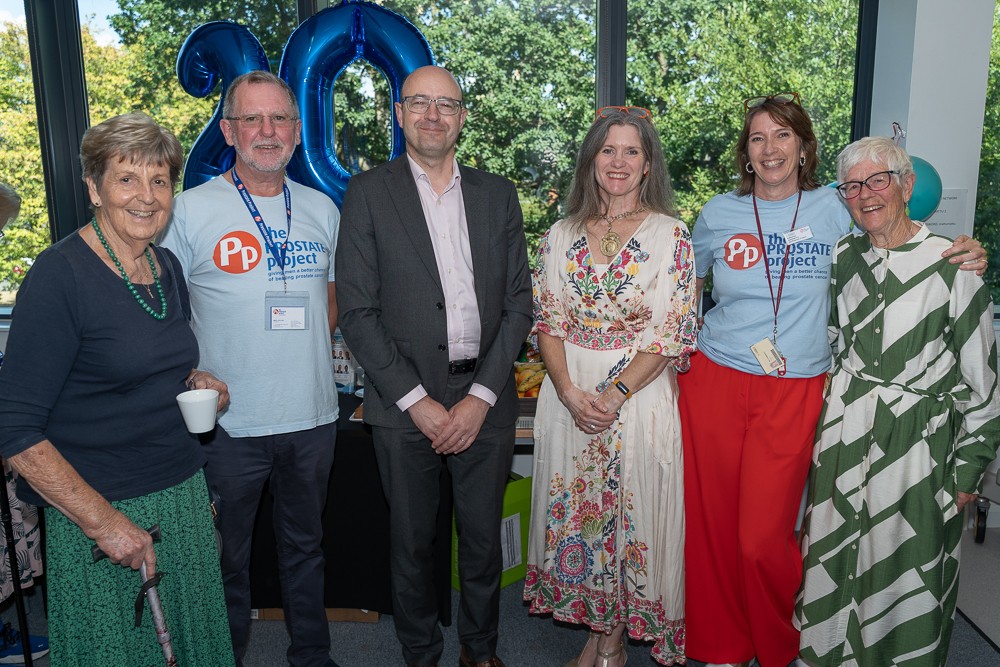
Prostate cancer is the most commonly diagnosed cancer in the UK, with more than 64,000 men receiving a diagnosis each year. Thanks to the partnership between the Prostate Project and the university, scientists at Surrey continue to make discoveries in the treatment and diagnosis of the cancer. The team's work has contributed to advances across the prostate cancer research landscape, including the discovery of biomarkers with potential to improve detection and diagnosis, and research accelerating new approaches to immunotherapy and personalised treatment.
Dr Nicola Annels, Senior Research Fellow at the University of from Surrey, said:
“I am astonished at what we have been able to achieve here at Surrey since our inception in 2006. What makes our team and our research so successful is the links we have with the local community, with the Royal Surrey County Hospital and crucially, our relationship with the Prostate Project, who have been with us from the start. I look forward to what we will achieve in the next 20 years!”
To celebrate such successes and to recognise two decades of research at the university, the Surrey team, alongside partners from the Prostate Project, were recently joined by local dignitaries, including Zoe Franklin MP, local mayor Jane Tyson, and families of those affected by prostate cancer, to learn more about the work currently underway.
A presentation from Professor Hardev Pandha, Professor of Medical Oncology, gave an overview of two decades of progress in prostate cancer treatment, highlighting the many great strides have been made with early detected prostate cancer. Professor Pandha also commented that while with early detection we now have almost 100 percent survival rates after five years, only minimal progress has been made in treatments for advanced prostate cancer.
As part of the event, attendees also heard from Dr Guy Simpson, who is undertaking research into the development of a vaccine to prevent prostate cancer from returning and from PhD student James Thetford, who is seeking to understand why prostate cancer affects men differently, in particular, why black men are twice as likely to get prostate cancer compared to white men.
Rounding off proceedings was Dr Mohammad Asim who delivered a talk about his development of novel anti-androgen drugs to treat prostate cancers that have become resistant to current treatment.
Martin Davies, Chairman of the Prostate Project, said:
“It was a pleasure to welcome so many friends, including some of our corporate supporters, long time donors, fundraisers and members of the research teams to help us celebrate this remarkable anniversary.
“The Prostate Project co-funded the establishment of cancer research at the University of Surrey in 2006, and seeing it develop so successfully over the past twenty years has been a source of great pride to everyone involved with the charity.”
Related sustainable development goals

Featured Academics




Media Contacts
External Communications and PR team
Phone: +44 (0)1483 684380 / 688914 / 684378
Email: mediarelations@surrey.ac.uk
Out of hours: +44 (0)7773 479911