
GCARE’s Guildford Living Lab strengthens community partnerships at Guildford Green Day 2026
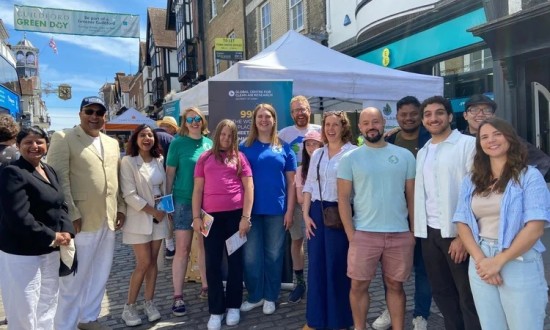
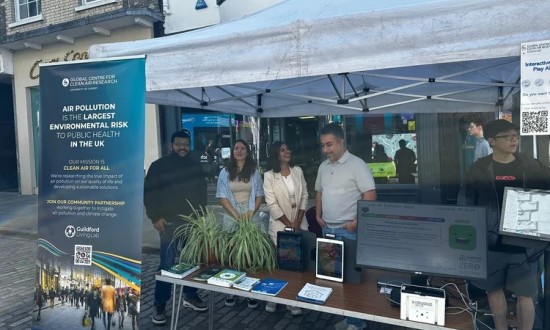
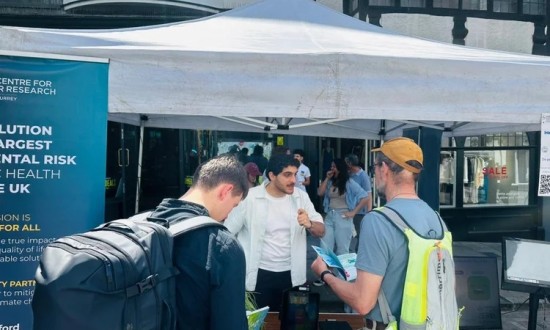
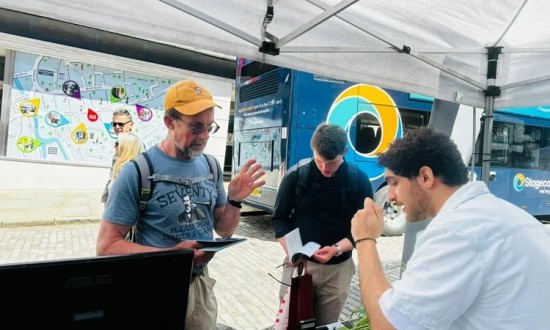
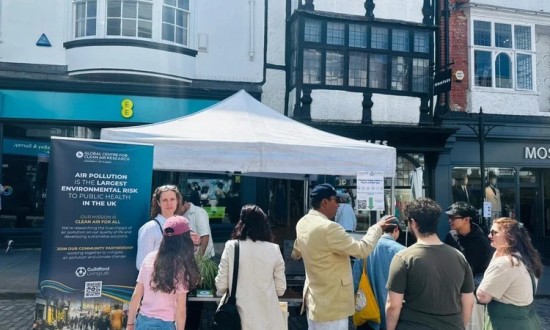
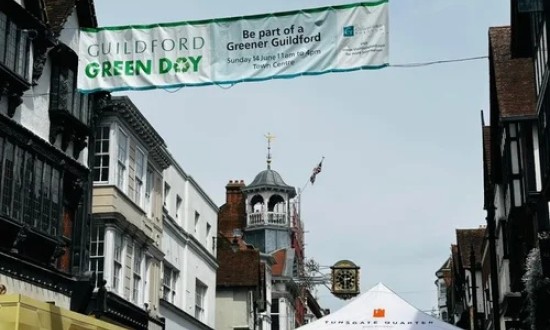
The Global Centre for Clean Air Research (GCARE) at the University of Surrey once again joined the Guildford community for Guildford Green Day 2026 on 14 June, with its Guildford Living Lab (GLL) team hosting an interactive stand on Guildford High Street.

The event, organised in partnership with Guildford Borough Council and local community groups, brought together residents, businesses, researchers and charities to explore practical ways to tackle climate change and improve air quality.
Building on the success of Guildford Green Day 2025, GCARE’s presence this year continued to focus on making complex environmental data understandable and relevant for everyday life. The team showcased interactive demonstrations on air quality, using real-time displays and hands-on activities to help visitors explore how pollution and heat can vary across the town and throughout the day.
VIP event and MP visit underline importance of clean air
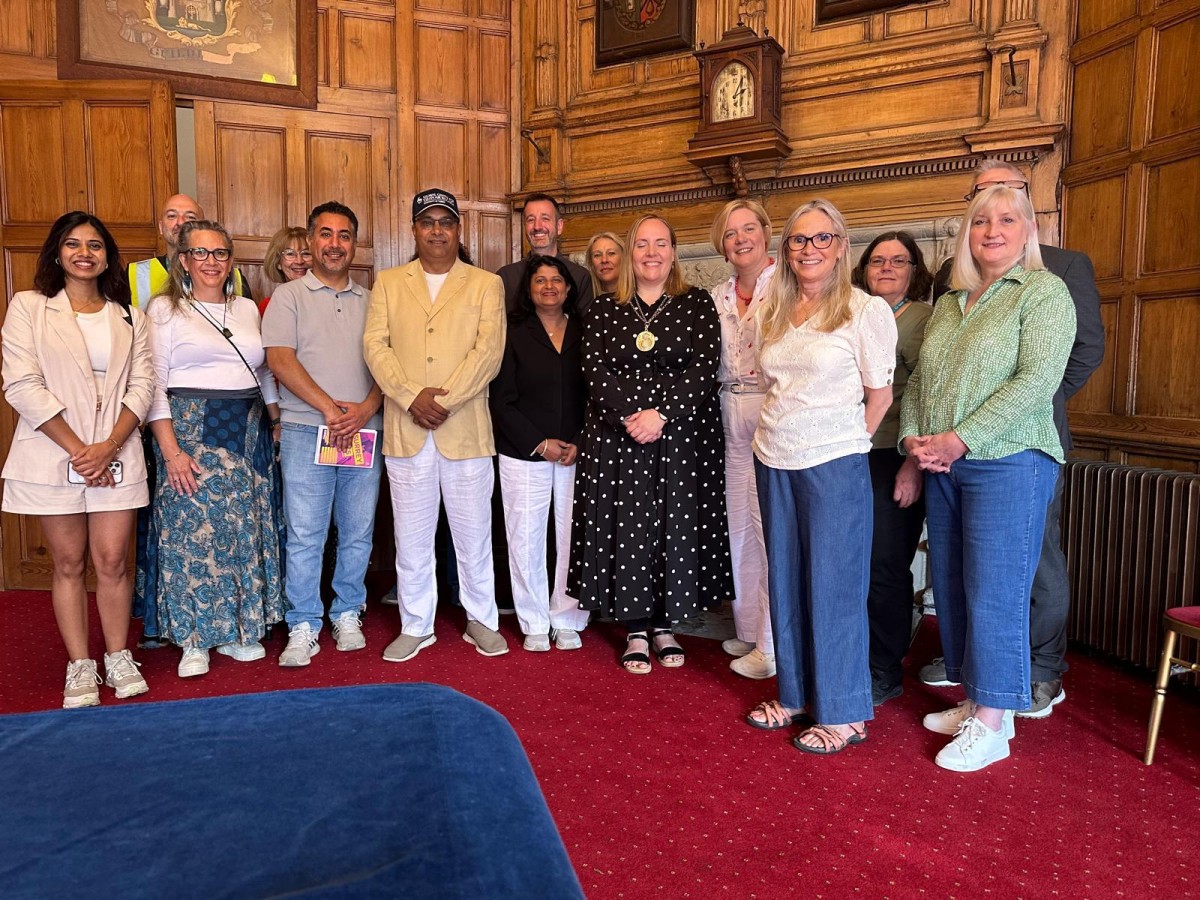
At the VIP reception, Professor Prashant Kumar, Founding Director of GCARE and Co‑Director of the Institute for Sustainability at the University of Surrey, highlighted the vital role of community engagement in driving meaningful climate and clean air action.
Professor Kumar remarked: “Events like Guildford Green Day show how powerful it can be when local authorities, researchers and community groups come together around a shared goal of cleaner air and a safer climate. By bringing our monitoring tools and real‑world evidence onto the High Street, we can have honest, practical conversations about what works, what needs to change, and how we can move forward together.”
He added: “Our Guildford Living Lab is built on partnership – listening to residents, working with schools, charities and the council, and co‑creating solutions that fit local realities. Green Day is not just an outreach activity; it is an important part of how we ensure that our research is grounded in people’s lived experiences and supports Guildford’s wider journey to a low‑carbon, healthy future.”
During the day, the GCARE stall was also visited by the local Member of Parliament, who heard how the Guildford Living Lab is supporting community‑led initiatives on air quality, climate resilience and greener streets, complementing the borough’s ambition to reduce emissions and support healthier neighbourhoods.

Voices from the GCARE team
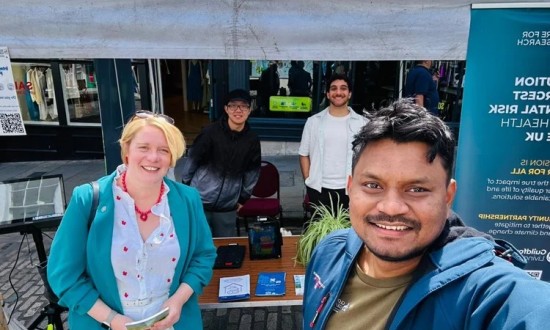
This year, GCARE’s presence was led on the stand by researchers including Dr Hao Sun and Dr Akash Biswal, who are actively involved in community‑facing projects
Reflecting on the day, Dr Sun commented:
“Guildford Green Day gives us a rare opportunity to stand side by side with residents and talk about air quality in a way that is personal and practical. When people can see data from their own High Street, in real time, it changes the conversation – it becomes about their children’s walk to school, their favourite café, their daily commute. Those conversations are essential for shaping solutions that people feel ownership of.”
Dr Biswal added:
“What stood out to me was how keen visitors were to discuss small but meaningful actions – from choosing active travel where possible, to supporting more trees and planting in their streets. Our role as researchers is not only to generate robust evidence, but to translate it into options that make sense for households, communities and local decision‑makers. Engagement days like this help us understand the barriers people face and the support they need to make changes.”
Both researchers emphasised that the dialogue was two‑way: while the team shared insights from their latest work, they also gathered valuable feedback from residents about priorities, concerns and ideas for future projects.
Community engagement for a cleaner, healthier Guildford
GCARE’s ongoing collaboration with Guildford Borough Council, local organisations such as Zero Carbon Guildford, and a range of community partners reflects a shared commitment to connecting scientific research with real‑world impact. Green Day 2026 reinforced the role of the Guildford Living Lab as a bridge between university research and local action, creating a space where citizens, practitioners and policymakers can jointly explore solutions for cleaner air and climate resilience.
Council members showed particular interest in the RECLAIM Urban Greening “How-To” Toolkit, which was shared with them as a practical, evidence-based resource to support the planning and implementation of nature-based solutions in Guildford and other cities.
Participation in Guildford Green Day 2026 underlines GCARE’s long‑term commitment to community collaboration, open dialogue and co‑creation. Through the Guildford Living Lab and its wider portfolio of clean air and climate resilience activities, GCARE will continue working with residents, schools, local authorities and partners to support a cleaner, healthier and more sustainable future for Guildford and beyond.
This work at Guildford Green Day 2026 is underpinned by several flagship GCARE projects. GP4Streets (DIY Greening Prescription for Climate Adaptation in Urban Streets) is led by GCARE in partnership with the Universities of Bath, Sheffield, UWE Bristol and Imperial College London, and is funded by UK Research and Innovation (UKRI) – including NERC, AHRC, EPSRC, ESRC and MRC – and the Department for Environment, Food & Rural Affairs (DEFRA) under the Maximising UK Adaptation to Climate Change initiative (grant reference UKRI1281). The GREENIN Micro Network Plus: Transformation of indoor environments in a changing climate is funded by UKRI (EPSRC) and explores how indoor plants and greening can improve health and environmental quality in homes and workplaces. SMART-COAT (Air-Purifying Paint Development Project), funded by the British Council, is developing and evaluating photocatalytic paint formulations to remove VOCs and PM2.5 under real urban conditions. RECLAIM (Reclaiming Forgotten Cities – Turning cities from vulnerable spaces to healthy places for people) is a UKRI (EPSRC, NERC, AHRC) Network Plus grant that provides a ‘one-stop shop’ for towns and cities seeking evidence and tools – including the Urban Greening “How-To” Toolkit – to design, deliver and scale green-blue-grey infrastructure for healthier, more climate-resilient communities.
Related sustainable development goals


