
Central Bank Digital Currency (CBDC) for small and medium-sized businesses and supply chains: opportunities and challenges
Start date
December 2023End date
June 2025Overview
A Central Bank Digital Currency (CBDC) is a digital form of a country's national currency issued by its central bank. Unlike cryptocurrencies such as Bitcoin or Ethereum, CBDCs are typically considered legal tender and are directly backed by the government.
Worldwide, central banks, including the Bank of England are exploring ways to offer their citizens a safe and reliable CBDC, because they can be universally accepted and improve financial inclusion by providing a digital, secure, and accessible form of money for individuals who do not yet hold bank accounts.
There are also sizeable benefits to business, which include reduced transaction costs, faster and more efficient cross-border transactions, the ability to implement innovative monetary policy measures, improvements to supply chain data sharing, financial data sharing and invoicing, and increased levels of security.
This ESRC IAA-funded project has been exploring the opportunities that CBDCs offer to small businesses, and the challenges that need addressing before widespread adoption occurs. These include privacy, security, GDPR, interoperability and the infrastructure of CBDC operating models, and addressing them will require careful planning, collaboration between stakeholders, and ongoing adaptation to the evolving economic and technological landscape.
Dr Vahid Mirzabeiki from the Surrey Business School and partner organisation Portdex, have been identifying the regulatory frameworks needed, the possibility for interoperability across borders, and the feasibility of CBDC for peer-to-peer money transactions in supply chains between individuals and businesses.
Team

Principal Investigator
Dr Vahid Mirza Beiki
Senior Lecturer in Operations Management
Biography
Dr. Vahid Mirzabeiki is a Senior Lecturer in Operations Management and Director of the MSc Operations & Supply Chain Management programme at Surrey Business School. His research focuses on digital transformation, technology adoption and innovation in operations and supply chains, with a particular interest in addressing real-world challenges through collaboration with industry.
His research has been published in leading international journals, including the International Journal of Operations & Production Management, International Journal of Production Research, International Journal of Production Economics, Journal of Business Research, and Production Planning & Control. He is a member of the Editorial Review Boards of the International Journal of Operations & Production Management and the Journal of Purchasing and Supply Management, and regularly reviews for leading journals in operations and supply chain management. He has secured research funding as Principal Investigator, including funding from the Economic and Social Research Council (ESRC), and has received consulting and research funding from GS1 UK.
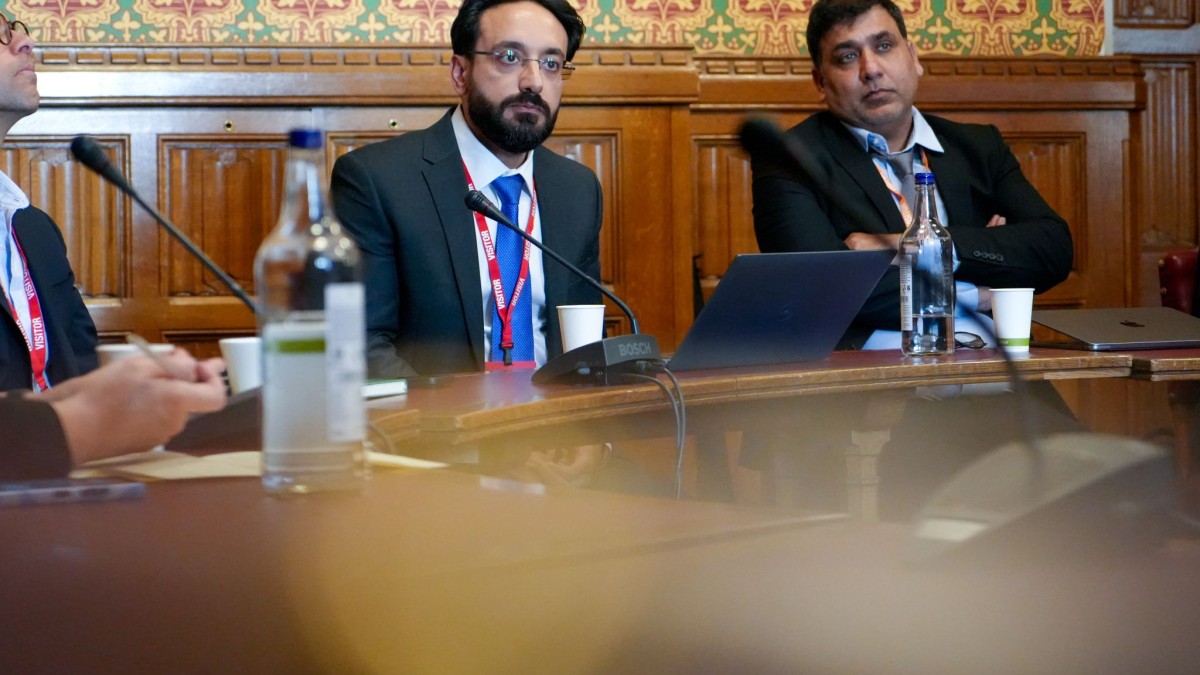
Vahid's research has informed industry and policy. He has worked with organisations including DHL, Volvo, Nestlé, Pladis, GS1 UK and the Swedish Transport Administration, and has led research projects addressing emerging challenges in digital supply chains and finance. He has presented his work on Central Bank Digital Currencies and asset tokenisation for SMEs and supply chains to the All-Party Parliamentary Group for Digital Money and Digital Markets at the House of Parliament.
He is a recipient of the Surrey Business School Mid-Career Researcher of the Year Award (2021/22) and has served on the Harry Boer Best Paper Award Committee of EurOMA since 2025. He has also organised and chaired sessions at major international conferences, including EurOMA, POMS and DSI, and has been invited to speak at universities including the University of Bristol and the University of Lyon.
Before joining Surrey, Vahid was a Senior Research Fellow and Lecturer in Supply Chain Management at Cranfield University (2013–2018), followed by a Senior Lecturer position at Coventry University Business School (2018–2020), where he also served as Director of the Executive MBA Apprenticeship Programme.
Vahid holds an MSc and PhD in Supply Chain Management from Chalmers University of Technology, Sweden, and a Postgraduate Certificate in Academic Practice from Cranfield University. He is a Senior Fellow of the Higher Education Academy (SFHEA) and a Member of the Chartered Management Institute (MCMI). He is also a Visiting Faculty member at Bayes Business School, City St George's, University of London.

Partner / Co-Investigator
Muhammad Tanoli
Director - Portdex Ltd

Nikolai Kazantsev
Research Fellow
Creating Impact

A feasibility study conducted through the project is enabling the supply chain finance industry to gain a better understanding of the potential benefits and risks of using CBDC.
- How can CBDC be used to reduce transaction costs and improve cash flow for SMEs in supply chain finance?
- What new business opportunities could CBDC create for SMEs supply chains?
- How can CBDC be used to comply with existing regulations for supply chain finance?
- What technical challenges need to be addressed in order to implement CBDC for SMEs supply chain finance?
- How likely are SMEs to adopt CBDC for supply chain finance?

- Studying the CBDC and cases of pilots based on using it
- Contacting SMEs to join the study
- Conducting interviews and focus groups with stakeholders including SMEs, Portdex, Central Bank of England and De La Rue.

The team has produced three reports - on the organisational, regulatory and technical aspects of implementing CBDC for SME supply chains - based on extensive field studies, modelling and engagement with key stakeholders.
The aim of this ESRC IAA-funded project was to provide a careful business analysis and feasibility study for CBDC uptake, prior to developing a network for peer-to-peer digital currency transactions, while digital currency is being created by the central banks and digital transactions are becoming regulated.
The outputs of the project - a series of detailed reports - are available to view and download below. It is hoped these will contribute to the advancement of digital currency initiatives worldwide, leading to widespread change in the approach to CBDCs for the benefit of financial organisations, businesses and ultimately the consumer.