

Computer science teaching facilities
Explore our computer science teaching facilities, including modern labs, specialist software, GPU computing and 24‑hour access spaces supporting study and projects.
Take a virtual tour
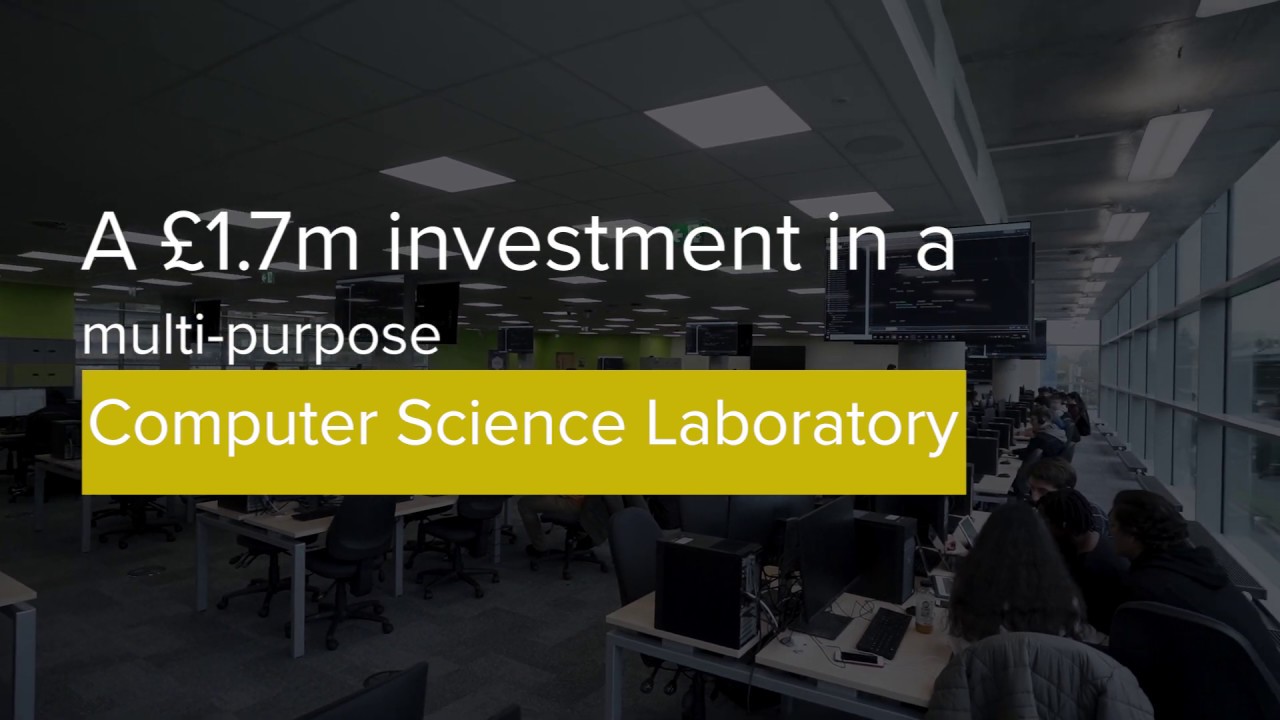
The University of Surrey has made a significant investment of over £7 million into new and upgraded facilities within its Faculty of Engineering and Physical Sciences, reinforcing its commitment to delivering cutting-edge education and research opportunities. This investment includes a new £1.7m lab as seen in the following virtual tour.
The investment has particularly benefited the computer science discipline, and this video explores the computer science areas that benefited, equipping students with access to state-of-the-art technology designed to meet the growing demands of modern computing fields such as artificial intelligence (AI), data science, and cybersecurity.
Facilities to support your studies
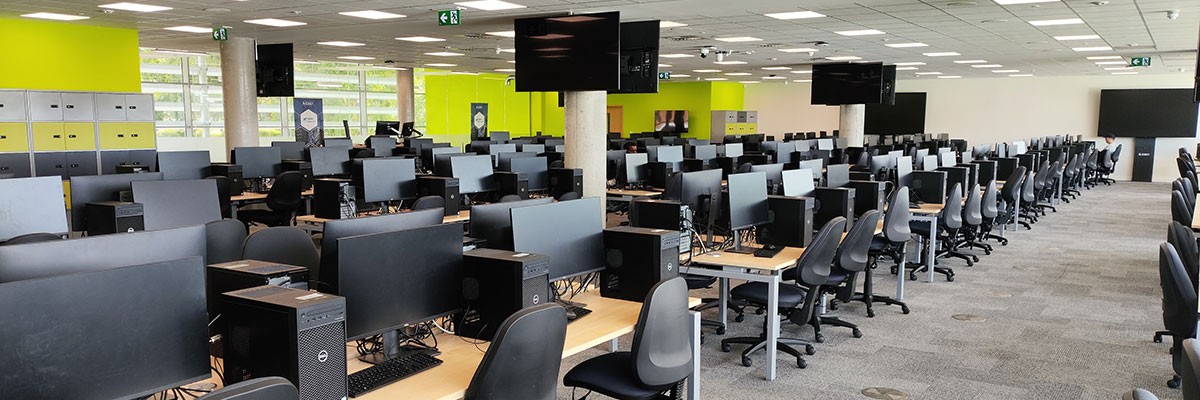
At the heart of the investment are two flagship laboratories: the Ada Lovelace Lab and the Otter Lab. The Ada Lovelace Lab features 200 workstations, each powered by NVIDIA Quadro P4000 graphics cards, while the newer Otter Lab offers 162 machines equipped with high-performance NVIDIA RTX A4000 Graphic Processing Units(GPUs) with 16GB of memory. These powerful systems are specifically designed to support intensive, multi-core workloads, enabling students to engage with advanced computing tasks such as deep learning, machine learning, and large-scale data processing. Our Otter Lab also provides both in-person and remote access, available 24 hours a day, ensuring flexibility for students to work on their projects at any time.
In addition to these flagship labs, the Faculty provides a range of Linux and Windows-based computing laboratories across the University. All Linux lab GPUs are interconnected through the Babbage HTCondor cluster, forming a High-Throughput Computing (HTC) environment. This infrastructure allows students to efficiently run large numbers of computational jobs, making it particularly valuable for research and coursework in data-intensive fields.
Further enhancing the computing environment is the OpenNebula installation, an on-premises cloud platform that allows students to create and manage virtual machines. This system provides a secure environment for experimenting with software, testing security protocols, and exploring cloud computing concepts without risk to our core systems.
The school supports project work by funding specialist equipment on a case-by-case basis. This can include devices such as payment card readers, Internet of Things (IoT) hardware, or small autonomous vehicles, enabling students to bring innovative ideas to life.


Specialist facilities
Machine learning (ML), data science and artificial intelligence (AI)
The University has also made substantial investments in high-performance computing to support teaching in AI and ML. Students benefit from priority access to GPU nodes within the AISurrey research cluster, one of the University’s premier High-Performance Computing (HPC) facilities. AISurrey is a GPU-focused cluster designed for AI, machine learning, and high-throughput workloads. It combines powerful compute hardware with a high-performance WEKA storage system to handle the demanding input/output requirements of modern GPUs.
The cluster includes a range of advanced NVIDIA GPUs, from Quadro RTX 6000 cards with 24GB of memory to the latest RTX Pro 6000 Blackwell Series GPUs, featuring 96GB of ultra-fast GDDR7 memory, fifth-generation Tensor Cores, and fourth-generation RT Cores. These capabilities enable students to train large-scale machine learning models, including those based on complex transformer architectures, complementing the GPU resources already available in the teaching laboratories.
Edge and cloud computing, networking and distributed systems and security
Beyond AI and Data Science, we support education in cloud computing, networking, distributed systems, and cybersecurity. The OpenNebula platform serves as a dedicated teaching resource for these areas, allowing students to build and manage private cloud environments. Through practical exercises, students can configure firewalls, perform penetration testing using tools such as Metasploit, and experiment with networking configurations such as VLANs. This hands-on approach helps students develop real-world skills in ethical hacking and secure system design.
Coming soon
We are excited to have been awarded £4.3 million to expand its provision of defence-relevant skills in engineering and computer science. We will soon be expanding our provision with a new robotics and simulation lab.
Our ongoing investment represents a comprehensive upgrade to our computing infrastructure, ensuring our students are equipped with the tools, environments, and support needed to excel in a rapidly evolving technological landscape. Through a combination of advanced hardware, flexible access, and practical learning resources, we continue to prepare our graduates for careers at the forefront of innovation.