

Music performance
Whatever subject you may be studying, and whatever your musical tastes, you will discover an enormous range of inspiring musical opportunities, activities and societies for all students at Surrey. We place a strong emphasis on performance, which is integrated into every aspect of its research and practice.
Get involved with musical ensembles and societies
University ensembles
Whatever you study, come along and join one or more of our ensembles, and experience music making in friendly environment!
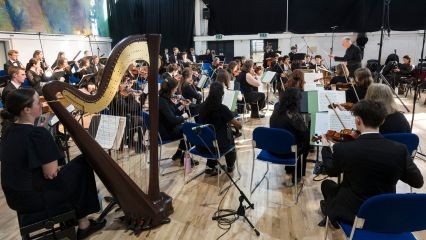
The University of Surrey is home to a successful and talented symphony orchestra formed from students, alumni, staff and members of the local community, and is led by our Director of Conducting, Russell Keable. The University Orchestra gives three major concerts each year, either on campus or in external venues such as Holy Trinity Church in the centre of Guildford.
Members of the orchestra will have the opportunity to work on a wide range of classical music. Over past years this has include ballets by Tchaikovsky and Stravinsky; suites by Bizet, Rimsky-Korsakov and Britten; overtures by Beethoven and Berlioz; symphonies by Dvorak, Sibelius and Shostakovich; plus choral works with the University Choir and some fun seasonal numbers for our Christmas concert!
The orchestra is a friendly and welcoming group that meets on Monday evenings from 7pm to 9pm in PATS Studio 1 during semester time. Auditions are held at the start of the academic year for students from all programmes. Joining the orchestra during the course of the year is also possible; to find out more please contact orchestra@surrey.ac.uk. Players are generally expected to have reached Grade 7 or above on their instrument.
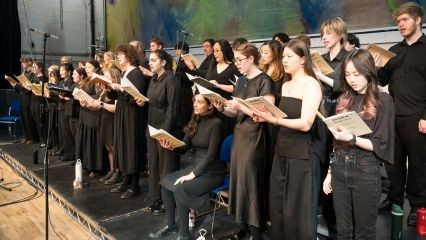
The University Choir is a lively and fun choir open to all University students and staff from all subjects, plus members of the local community. A basic level of sight-reading, an ability to hold a tune and general enthusiasm is all we ask for! No audition is required.
We rehearse every Wednesday evening from 7:30pm to 9pm in PATS Studio 1, and perform several times a year at Holy Trinity Church and other venues both on and off campus. We have performed with the University Orchestra on a range of challenging works including Vivaldi’s Gloria (complete), choruses from Handel’s Messiah and selections from the musical My Fair Lady, as well as performing some choir-only pieces.
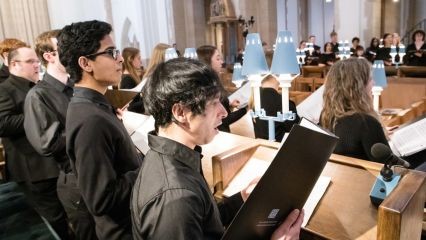
The University Chamber Choir, conducted by Amy Kearsley, is open to all students via a short, friendly audition. We rehearse on Wednesday evenings from 5:30pm to 7pm in PATS Studio 1 during semester, including the January assessment period and the period following the Spring vacation. The expectation is that Chamber Choir singers will stay on to University Choir, which rehearses on the same evening.
The Chamber Choir performs challenging repertoire, mainly unaccompanied and often contemporary, including works with soloists drawn from the choir. We perform at a wide range of events throughout the year, both on and off campus, including the highly regarded University Carol Service at Guildford Cathedral.
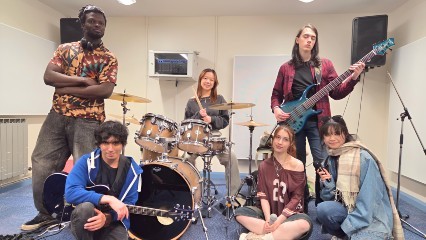
At the University of Surrey, we often find that students who play classical music come together to form chamber ensembles, and students who play (or sing) popular music form bands. There are many opportunities for both types of groups to perform, both on campus in our regular concert series and at external venues.
Concerts of classical chamber music given by our student ensembles in the last year have taken place in venues including G Live in Guildford town centre, Guildford Cathedral and local churches such as St Martha-on-the-Hill. Our bands have recently been given a platform for performance in our Band Nights hosted in PATS Studio 1, featuring a stellar line-up of student groups.
Larger groups also form on an ad hoc basis, for instance, the ‘Beyond Words’ Concert given at Guildford United Reformed Church in November 2025 featured a 46-piece student orchestra plus professional soloists, performing a range of both classical repertoire and popular arrangements.
Student-led ensembles
There is a wide range of student-led ensembles and societies you can sign up to throughout the academic year. These ensembles create a community of musicians across the University.
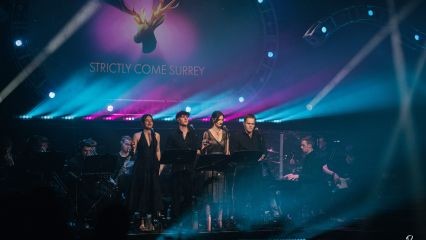
The University of Surrey Big Band is Surrey’s premier jazz ensemble. We are a 21-piece big band comprising saxes, trombones, trumpets, rhythm and two vocalists. The varied repertoire includes a diverse range of genres such as swing, Latin, samba and funk, making live shows hugely atmospheric and entertaining.
We audition for members at the start of each academic year to form a first-class band of students from various programmes and Schools which rehearses weekly on Tuesday evenings to prepare for functions taking place both within Surrey and externally. We participate in competitions, perform at sell-out headline gigs and hold an exciting annual tour. Members benefit from regular social events to which friends of the band are always welcome.
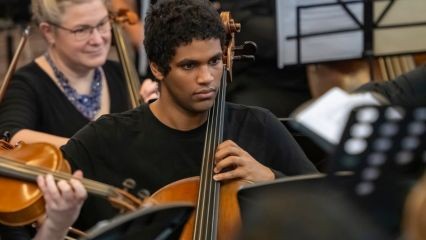
The University of Surrey String Orchestra is open to everyone who plays a string instrument, no matter what subject you study, and requires no audition. We pride ourselves on our social ethos and a broad repertoire, primarily performing in music department ensemble concerts, recording sessions and concerts in Guildford.
In the past we have performed film and television score arrangements including Pirates of the Caribbean and Stranger Things and pop song arrangements by artists such as Abba and Billy Joel, in addition to standard classical repertoire like Holst’s St Paul Suite and Elgar’s Serenade for Strings. We work closely with student conductors and soloists.
Rehearsals are on Thursday evenings between 6pm and 8pm in the Teaching Block.
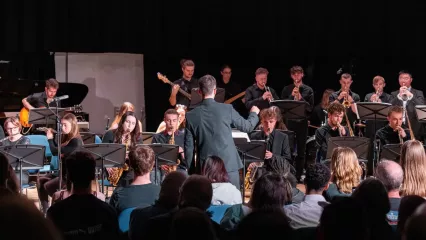
JazzO, the University of Surrey Jazz Orchestra, is an open and welcoming student-led group playing all types of jazz music in a relaxed setting from Sing! Sing! Sing! to Chameleon and Reptile. We are always open to song suggestions as well as student compositions and arrangements.
Rehearsals are held on Thursday evenings from 7pm to 9pm, with a break halfway through so that you have plenty of time to mingle with the rest of the band. No audition is required; just come along!
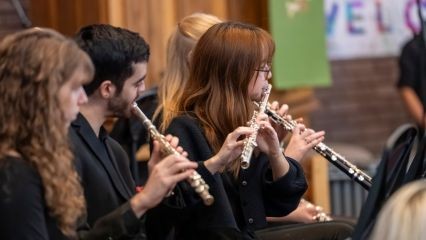
The University of Surrey Wind Band is a great way for keen musicians to perform as part of a wind ensemble. We are open to anyone who plays a woodwind or brass instrument as well as percussionists who want to play a variety of pieces including film and musical medleys. Our aim is to perform in multiple concerts throughout the year.
We do not hold auditions and our memberships are free, so please just come along and get involved. Our rehearsals are on Tuesdays from 7pm to 9pm in 10 TB 00. Feel free to give us a follow on Instagram: @uos_windband.
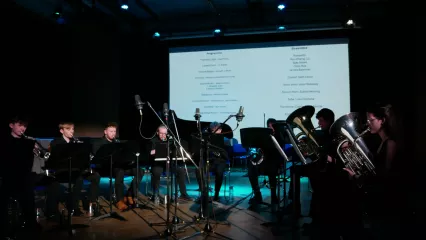
The University of Surrey Brass Ensemble is open to all brass players. We rehearse weekly on Wednesday evenings. We perform alongside other ensembles in the DMM Ensembles Concert each semester, as well as being involved in a range of other performance opportunities, especially over Christmas!
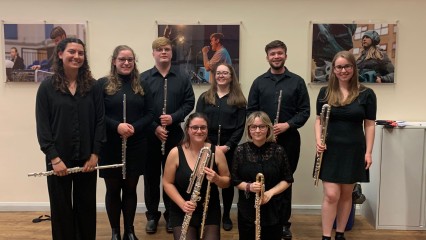
The Flute Choir exists to provide flautists with a welcoming and inclusive space to continue making music alongside their academic studies. It offers students the opportunity to develop their ensemble skills, explore diverse flute repertoire beyond solo performance, and perform regularly in a supportive, low-pressure environment. The society also serves as a social and creative community, connecting students with a shared interest in music, encouraging collaboration across disciplines, and enriching campus cultural life through performances and outreach.
Student-led societies
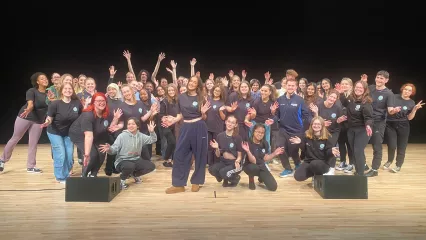
The University of Surrey Musical Theatre Society (MTSoc) offers the chance to express your love of performing no matter your experience level. We perform two showcases per year, one in the autumn and one in the summer, in addition to presenting a main show with costumes, lights and a live band in early March. Last year, our main show was Grease. Our regular rehearsal times are Mondays and Thursdays from 6pm to 10pm with occasional Sunday rehearsals in the lead-up to showcases and the main show.
We welcome performers of all abilities because at the end of the day, we’re all there to have a good time which is reflected in how well our members get along. By holding regular socials outside of rehearsal times, we nurture these friendships and create a space where people feel included no matter what.
Please reach out to us on Instagram at @ussu_mtsoc or e-mail at ussu.musicaltheatre@surrey.ac.uk if you’re interested in joining!
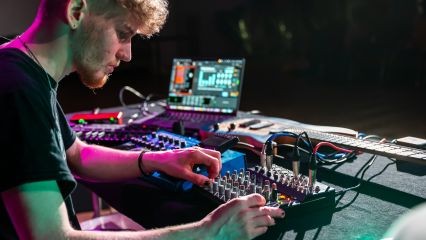
No Wave is the University of Surrey's Alternative Music Society. We are the society for all things rock, indie, metal, electronic, folk and all subgenres and spin-offs (although this is not exhaustive). We are also the oldest continuously running society at the University!
Every Monday, we host Open Jams where anyone can turn up with their instrument and play with other people. Many bands have formed from these jams.
Every Tuesday, we have socials, where we have a drink and a chat with our group playlist in the background.
We are also the only society which regularly runs gigs. Most of these gigs are on-campus and all have cheap ticket prices.

StagTV is the award-winning student-run television station at the heart of campus. Focusing mainly on live productions and recordings, we work closely with societies and sports clubs all across the university to deliver everything from sports livestreams, debate shows for the Students' Union, in-house productions and recorded performances for Musical Theatre Society, Big Band and many more.
Members have hands-on access to our increasing inventory of industry-standard equipment and are encouraged to try a variety of roles, including directing, camera operating, sound mixing and more. No experience is necessary as training is available from our skilled committee members, some of whom have had practical industry experience and are happy to develop your broadcast skills in a pressure-free environment. Outside of our productions, we also run regular socials throughout the year – bar crawls, movie nights and more.
Follow us on Instagram @stagtvsurrey to find out more about our events starting in Freshers' Week!

Stag Radio is the official student-run radio station at the University of Surrey, bringing you music, entertainment and live broadcasts throughout the year! Whether you're passionate about radio presenting, DJing, music production, podcasting or behind-the-scenes tech, there's a place for you at Stag Radio.
Join us to share your music taste, talk about topics you love or contribute to a unique podcast; get hands-on experience performing at campus events and club nights; get involved with the unique ins and outs of sound engineering, broadcasting and recording; work on videos, social media and creative projects to expand your media skills; and meet like-minded students, collaborate on exciting projects and have fun!
No experience? No problem! We provide full training and support to help you find your voice. Whether you're looking to develop new skills, gain media experience or just have a great time, Stag Radio is the perfect place for you.
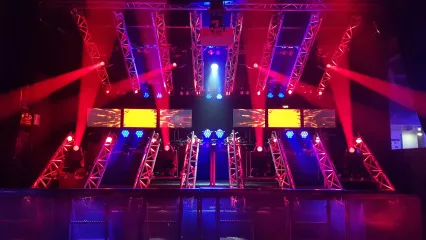
Surrey Stage Crew is a volunteer organisation that provides backstage support for a huge variety of events both on and off the University campus. From club nights and live streams to musical theatre productions, festivals and society events, we help bring events to life through sound, lighting, staging, video and production. We've had the opportunity to work with fantastic artists including Sigma, Chase & Status, DJ Fresh, Pendulum and The Hoosiers, as well as collaborating with societies such as MTSoc, Stag TV and many more.
No previous experience is needed to join our society; we provide training for everyone. We cover everything from basic sound and lighting, to working at height, rigging and practical skills you'll learn while working on gigs. Throughout the year we organise a range of social events, including BBQs, formal dinners, pub crawls and trips to industry trade shows, giving members plenty of opportunity to get to know each other outside of our events.
Our weekly meetings take place every Monday at 6pm. We usually meet in the Students' Union Committee Room or in Hari's Bar. This is where we get to share updates, discuss recent and upcoming gigs, organise crew availability, provide updates on training and socials and give everyone the opportunity to raise any ideas or ask questions.
If you'd like to see what we get up to, check out our Instagram and YouTube channels. Everyone is welcome, whether you're looking to learn new skills, work on exciting events or simply meet some great people!
Events
Music and Media maintains an exciting programme of some 70 events throughout the academic year, ranging from electronic music and film-based performances, through to pop and classical lunchtime concerts, competitions and assessed student recitals. Our annual events calendar includes our regular lunchtime recital series on Wednesdays from 1:10pm to 2pm in PATS Studio 1 during semester.
We programme the series of events to take advantage of visiting artists and exciting new projects as opportunities emerge during the year, to bring you a fresh, diverse and innovative programme of musical events drawn from around the world. For further information, please visit our events page.
Outreach activities
We have a wealth of experience and enthusiasm in musical outreach and educational work, interactive concerts and workshops. Through our outreach projects, we offer a range of activities to support our students with their current studies, and providing opportunities for pupils from all backgrounds to make music together. Teaching a range of musical skills through activities and games benefits all participants – broadening the horizons of pupils involved while offering valuable experience to our students!
Some of our projects include:
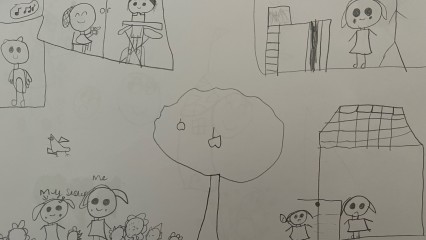
The Music and Images project gathered a group of first-year students, which all played instruments not traditionally be included in the same ensemble: electric guitar, electric bass, piano, lever harp, bassoon and voice. Through rehearsals we made a series of orchestrations for compositions of our choice, and practiced the concert and workshop delivery. We visited two schools in our area (Sandfield and Stoughton) and delivered a workshop and a concert for Year 2 children. The students introduced their instruments to pupils, and announced the pieces they played. The pupils in both schools drew while the group played, and joined in the discussion about how music made them feel and why. The children reacted really positively and were interested in the music delivered. They happily talked about their feelings and how they hear the music.
Have you ever wondered about how musical instruments make sounds? Or why some sounds are high and others are low? Join Head of Music and Media Chris Wiley and physicist Alexia Beale – who both play lots of instruments – and find out! In this 45-minute interactive session for school pupils aged 7 to 11, we’ll explore a range of instruments with strings and instruments you blow down, as well as those you hit with a stick. The event is targeted at Key Stage 2 (ages 7-11), but may be suitable for others as well. Audience participation is more than welcome! More about The Science of Musical Instruments event

In this talk, Dr Christopher Wiley (University of Surrey) explores some of the many connections between music and space. First, he discusses famous examples of people who have been interested in both space and music, including several contemporaries as well as Gustav Holst (The Planets), William Herschel (discovered Uranus), and Johannes Kepler (the music of the spheres). Second, he looks at some of the music that has been sent to and from space, both recent broadcasts (live and recorded) as well as the contents of Voyager’s Golden Records. Finally, he investigates composers’ representations of space through some of the most recognisable musical themes in the history of film and television, including Star Wars, Star Trek, and Doctor Who. In the course of this talk, he will perform music by Herschel and demonstrate the theremin, an electronic musical instrument commonly associated with the creation of otherworldly sounds.
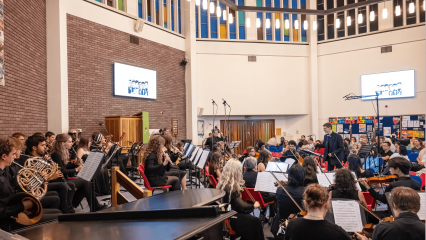
Hosted by the University of Surrey at Guildford United Reformed Church as part of the Being Human Festival 2025, this intergenerational concert featured a 46-piece orchestra comprising students, alumni, and special guests from the surrounding area, together with University of Surrey Brass Ensemble and the student-led vocal group Vox Hominum. It explored how music creates meaning and connections beyond words, and across generations, by presenting an event for the whole family framed around performances of five works by Surrey-based composer Dame Ethel Smyth, including two UK premieres. Completing the programme were arrangements of music from Jurassic Park, James Bond, and ABBA, as well as a new piece, Scenes from ‘Imoinda’, composed and conducted by our Honorary Visiting Professor Odaline de la Martinez, featuring professional soloists Donna Bateman (soprano) and Sandeep Gurrapadi (tenor). A series of short talks introduced the pieces presented and their relationship to the research and teaching undertaken at the University, as well as the instruments on which they were performed. Audience members also had the opportunity to try out selected instruments for themselves during the interval, facilitated by our Music Hub partner, Surrey Arts. Further information: Beyond Words: University of Surrey hosts packed concert blending music and research | University of Surrey
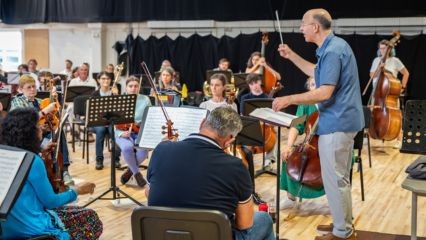
Twice a year, the University of Surrey hosts our community orchestra day, where we welcome local musicians to join students and staff to rehearse large-scale orchestral works across a single day (one Sunday during semester) and give an informal performance to the public.
The impressive repertoire for past Orchestra Days has included Mussorgsky’s Pictures at an Exhibition, Tchaikovsky’s Symphony No. 4, Prokofiev’s Romeo and Juliet, Bernstein’s Symphonic Dances from West Side Story and Vaughan Williams’s ‘London’ Symphony.
If you would be interested in attending any future Orchestra Day events, or in further information in becoming a member of the orchestra, please contact orchestra@surrey.ac.uk. The orchestra is non-auditioning but players are generally expected to have reached Grade 7 or above on their instrument.

‘The Lady is a Tramp’ by Frank Sinatra, performed by the University of Surrey Big Band, with Alex and Jacob on lead vocals. Filmed and produced by Tonmeister students.
Find your society
Experience everything we have to offer in an environment suitable for all, regardless if you're an established performer or somebody who is stepping onto centre-stage for the first time.


