


News
Read the latest news about our research and centre activities.
News

PAI and CVSSP's Professor Wenwu Wang, a leading figure in machine learning and audio processing, has had an extremely active season on the global conference circuit, cementing his status as a key influencer in the rapidly evolving world of AI-driven signal processing.
His involvement, ranging from chairing major international workshops to delivering keynote speeches on the future of sound and language models, showcases CVSSP and PAI's globally-leading* strengths in deep technical domains, aligned to its focus on people-centred AI.
Istanbul
Professor Wang's leadership was evident at the 35th IEEE International Workshop on Machine Learning for Signal Processing (IEEE MLSP 2025IEEE MLSP 2025IEEE MLSP 2025) in Istanbul, Turkey (August 31 - September 3). As the Technical Programme Chair, he was instrumental in shaping the academic agenda for one of the field's most important gatherings.
He also spearheaded the Industrial-Academic Joint Workshop on cutting-edge audio, speech, and language challenges, fostering essential dialogue between research and industry. Read more here.
The conference served as a platform for his research excellence:
His PhD student, Özkan Kılıç, presented a paper, co-authored with Dr Saeid Safavi (Professor Wang’s former postdoctoral researcher) detailing a novel dataset and framework for Drone Detection and Localisation using multi-channel audio - a crucial topic for security and airspace monitoring.
His former visiting student, Jinhua Liang, explored the challenging area of evaluating Text-to-Music systems, moving beyond basic aesthetics to focus on genuine human preferences.
London
Closer to home, Professor Wang brought his expertise to the 13th Computing Conference (Computing 2025) in London. He delivered a high-profile keynote address titled “Large Language-Audio Models and Applications,” diving into the next generation of AI that seamlessly processes both sound and text. Watch the slides here.
This talk, captured on video, highlighted the transformative potential of combining massive language understanding with sophisticated audio analysis - a frontier currently attracting huge research interest.
Nantes
Professor Wang’s collaborative spirit was in evidence at the IEEE International Conference on Multimedia & Expo (ICME 2025) in Nantes. Here, he co-organised the Audio Encoder Capability Challenge, pushing the state-of-the-art in how digital audio is processed and compressed - a fundamental technology underlying all modern streaming and communication.
He also contributed to the technical backbone of the conference, chairing two key sessions on "Domain Adaptation and Learning" and helping to present two papers “DCGNet: Detail and Context Guided Small Object Detection Network with Decoupled Detection Head” & “EMGPose: An Efficient Multi-Granularity Representation for Human Pose Estimation”, co-authored with his former academic visitor, Dr Shiyong Lan.
Rotterdam
Rounding out his busy season, Professor Wang attended the flagship speech technology conference, Interspeech 2025, in Rotterdam. He co-authored and presented with Dr Rohan Kumar Das (Fortemedia Singapore), a paper titled “EnvSDD: Benchmarking Environmental Sound Deepfake Detection”, addressing the serious, emerging challenge of detecting deceptive, AI-generated environmental sounds.
Professor Wang's busy and highly productive schedule underscores his pivotal role in the global conversation on signal processing and AI. His work is one of the keystones of the University of Surrey’s dominance* in tackling technical and societal challenges in machine perception.
*1st in the UK, 5th in Europe, and 23rd in the World for Computer Vision since records began [CSRankings.org, accessed 29 September 2025]

Save the date! 📅 PAI Director and Founder, Professor Adrian Hilton, has been invited to contribute to the British Safety Council Conference on 14th October 15:40-16:25 as a guest speaker and panel member talking about the impact of AI in the workplace.
Professor Hilton is looking forward to a productive day of insights, discussing the key topics of safe, ethical and people-centred AI. He will focus on how we can upskill people and bring them with us, as AI transforms how we work.
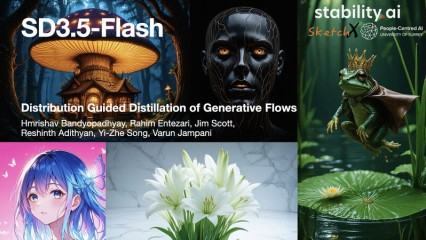
We proud to announce that our Co-Director, Professor Yi-Zhe Song and his team have made another landmark achievement in generative AI! 🚀
Together with Stability AI, they have announced SD3.5-Flash, a new model that brings high-quality, private, and local image generation directly to consumer devices, even our iPhones! This breakthrough continues the mission of SketchX lab to democratise creative AI, building on their previous projects like NitroFusion and DemoFusion.
SD3.5-FLASH is built on two key innovations:
- Timestep Sharing: a technique the research team developed that provides stable gradient signals and improves training stability.
- Split-Timestep Fine-Tuning: a method designed to improve prompt-image alignment by temporarily expanding model capacity during training.
This project was led by Professor Song's student researcher, Hmrishav Bandyopadhyay, during his internship at Stability AI. Professor Song said: "This is a perfect example of how industry and university collaboration can push the boundaries of AI, scaling academic innovation for real-world impact."
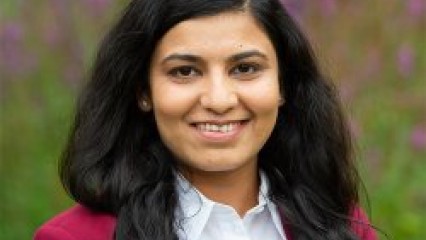
⭐ We are thrilled to announce that PAI and CVSSP's Dr Armin Mustafa has been named as a winner of the Tech Women 100 award in 2025. Dr Mustafa said:
"I am honoured to be named a TechWomen100 winner. For me, this award reinforces that our work is to create a better and innovative future. I hope this recognition inspires other women to pursue their passions in technology, knowing that their contributions are not only valued but essential. A huge thank you to my mentor and colleagues at the University of Surrey for their support, and WeAreTheCity for this incredible initiative."
Read about Dr Mustafa's incredible achievements here

Join us as CDT Manager for the UKRI AI Centre for Doctoral Training in Digital Media Inclusion and be at the heart of a programme shaping AI for good.
Flexible. Inclusive. Future-facing => Be part of a team that doesn’t just imagine the future of AI – we help build it.
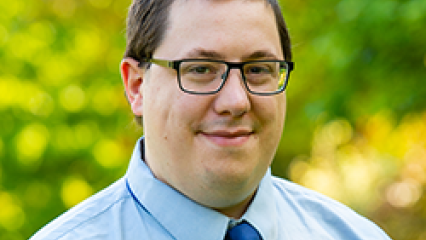
Our researchers have developed a new AI system that could change how autonomous vehicles navigate without GPS, narrowing down localisation errors from 734 metres to within 22 metres. In a paper published in IEEE Robotics and Automation Letters, Dr Simon Hadfield (pictured) and PhD researcher Tavis Shore describe PEnG (Pose-Enhanced Geo-Localisation), a technology that combines satellite and street-level imagery to determine location using only visual data. In environments where GPS signals are weak or obstructed, such as tunnels, big cities and regions with poor connectivity, PEnG offers a reliable and precise alternative for navigation.
Tavis and his team are now focused on building a working prototype, supported by the University of Surrey's PhD Foundership Award, which funds early-stage development of the proposed GPS-free navigation device.
https://www.surrey.ac.uk/news/new-ai-system-could-change-how-autonomous…
We are recruiting a Professor in Machine Learning and AI with a focus on Large Machine Learning Models to expand our dynamic team of internationally recognised AI researchers. This is part of a strategic investment of 6 posts across the School in AI, Cyber Security and Satellite Communications, which also incorporates a Lectureship to support this position. You'll lead ground-breaking research within our top-tier AI community, ranked 1st in the UK for Computer Vision and Top 5 for AI (CSRankings.org). Learn more and apply here: 039425 Professor in Machine Learning and AI - Jobs at the University of Surrey
Join us! We are recruiting a full-time lecturer in Robotics to expand our team of dynamic and highly skilled AI faculty and researchers. Surrey has an established international track record in AI research, 1st in the UK for computer vision and top 5 for AI, computer vision, robotics, machine learning and natural language processing (CSRankings.org) and 7th in the UK for REF2021 outputs in Computer Science research.

The UK’s new Compute Roadmap, announced by the Department for Science, Innovation and Technology, aims to strengthen the nation’s high-performance computing capabilities and workforce, with the University of Surrey chosen to host one of two national training hubs in a bid to close the gap in critical skills.
The Hub’s Surrey home brings vital benefits to the new venture: the University is a driving force in AI through its Institute for People-Centred AI (PAI) and Centre for Vision Speech and Signal Processing (CVSSP). The University’s ranking of 1st in the UK for Computer Vision since records began derives from CVSSP’s research. CVSSP’s Dr Helen Cooper (pictured) will serve as the Principal Investigator for the ACIT Hub.
The Accelerated Compute Infrastructure Training Hub (ACIT-Hub) has secured £3.9 million in funding, with a majority share awarded by UK Research and Innovation (UKRI) to deliver personalised, industry-recognised training for Research Technology Professionals (RTPs). Unlike traditional research grants, this initiative is almost entirely RTP-led.
“Accelerated compute infrastructure is technology that speeds up large computing tasks and it forms the bedrock of the burgeoning world of AI. This hub is about investing in people – giving them the skills, recognition and professional development opportunities they need to help the UK fully realise the potential of accelerated computing.” - Dr Helen Cooper
Dean Roe, Co-Investigator for the Hub and Dr Jaydeep Mody from Research Computing Services were instrumental in securing the bid alongside Dr Cooper, highlighting the expertise supporting the venture at the University.
“The ACIT-Hub is led by Research Technology Professionals and will draw upon our collective knowledge and experience of the real-world challenges of supporting and delivering the technologies and systems underpinning accelerated compute. The Hub will offer practical, high-quality training that meets the needs of our community. We’re proud that Surrey is leading this effort to strengthen the UK’s computing capabilities and support the next generation of technical experts.” - Dean Roe
Secretary of State for Science, Innovation, and Technology Peter Kyle said: “Britain has top of the class talent in AI and our plan will put a rocket under our brilliant researchers, scientists, and engineers – giving them the tools they need to make Britain the best place to do their work. This will mean we can harness the technology in Britain to transform our public services, drive growth, and unlock new opportunities for every community in the country.”
The ACIT-Hub is partnering with other leading universities; Oxford, Sheffield, Imperial and Bristol, and draws on networks such as the UKRI Tier 2 JADE consortium to deliver coordinated, industry-relevant training and support the UK’s accelerated computing goals.
PAI’s founding tenet in 2021 was to put people at the heart of AI. PAI delivers trustworthy, people-centred advancements that touch every facet of our lives; revolutionising healthcare, education, sustainability, creativity, information, entertainment and social inclusion.

Professor Philip Jackson (left) and Dr Davide Berghi (right) have developed a sophisticated new approach to sound localisation and detection in videos. It addresses the challenge of identifying the precise location and type of sound in stereo recordings. This is critical for applications like surveillance technology and assistive listening devices.
To achieve this, they developed a specialised AI that acts like a fusion centre, combining information from both sound and visuals. This allows the system to understand not only what a sound is but also how far away it is. It does this by integrating pre-trained models (CLAP for audio and OWL-ViT for visuals), to incorporate rich semantic embeddings.
The research is an important step forward in enabling machines to interpret acoustic scenes in a way that closely mirrors human perception.
Professor Jackson said: "Sound is often used to capture your attention, and good alignment between sound and vision makes an experience feel more natural; it brings the story to life. By integrating models from other areas of machine learning, we can help these networks better understand what's in the videos to hear and locate significant events more accurately."
When submitted to the DCASE2025 Task 3 Challenge, the system performed significantly better than existing methods.
This breakthrough shows great promise for highly precise sound localisation in everyday videos.
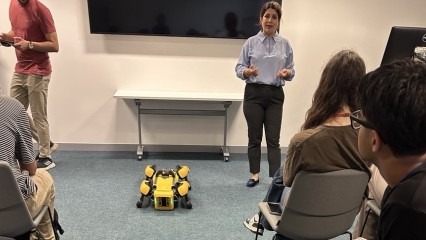
Recently, our Outreach Lead, Dr Samaneh Kouchaki led an inspiring summer school for local sixth-form students. The programme, 'Exploring Smart Tech & Future Networks,' provided 21 students from various schools with hands-on experience in cutting-edge technologies and a glimpse into future career paths.
Supported by the University of Surrey’s Student Success initiative, the summer school offered a unique blend of theoretical learning and practical demonstrations.
Dr. Kouchaki was supported by a team of dedicated academics and student researchers from CVSSP and CSEE, including Drs Marco Volino, Simon Hadfield, Radu Sporea, Mohsen Khalily, Shadi Danesh, and student researchers Bahar Khoram and Ahmed Bourouis. Their collective expertise ensured an inspiring learning experience for participants.
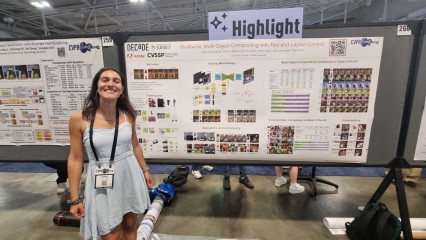
In a remarkable accomplishment for a newly graduated scientist, CVSSP’s Dr Gemma Canet Tarrés's research has been honoured at CVPR 2025, a conference recognised by Research.com as the number one machine learning/artificial intelligence conference and the top computer science event.
Dr Canet Tarrés’ research was not only lauded as a highlight paper of the show, but also featured extensively in the conference's daily newsletter. This is an outstanding achievement for Gemma, a member of our DECaDE research lab, who recently passed her viva with no corrections. This recognition provides excellent exposure for her research, which was conducted in collaboration with Adobe during her recent internship.
Dr Canet Tarres said: “I feel extremely grateful that people liked my work and found it relevant enough to be selected as a highlight at CVPR and even featured in the newsletter. I hope it can be useful, inspire others and, in one way or another, contribute to advancing the field of image generation.”
Congratulations, Gemma and team!
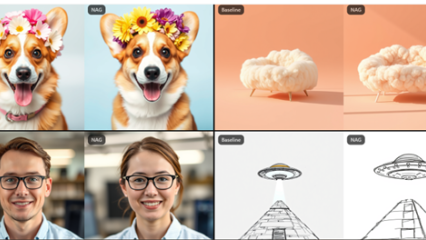
PAI and CVSSP are immensely proud of the latest revolutionary breakthrough from our SketchX Lab, led by PAI Co-Director and CVSSP Professor Yi-Zhe Song: the groundbreaking NAG (Normalized Attention Guidance), a project led by PhD student Dar-Yen Chen.
NAG is a technical leap that makes generative AI (especially diffusion models) far more practical and controllable for creators and developers, allowing them to quickly generate high-quality, precisely guided content.
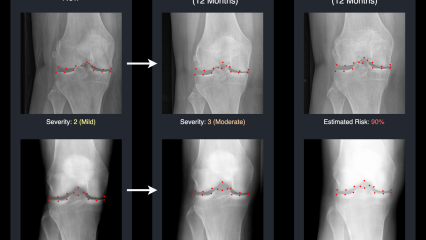
Supervised by PAI and CVSSP Professors Adrian Hilton and Gustavo Carneiro, PhD researcher David Butler has produced an important paper on how AI can improve osteoarthritic knee care. This is an important leap towards more personalised, anticipatory care, using AI not just to predict but to communicate future health states in a proactive way. The paper has recently been accepted to MICCAI, the leading medical image analysis conference, as being in the top 9% of the submissions, a huge accomplishment in itself.
But the researchers see the potential effect on patient outcomes as their greatest achievement.
Pre-print of the paper that will be published in October/25: Risk Estimation of Knee Osteoarthritis Progression via Predictive Multi-task Modelling from Efficient Diffusion Model using X-ray Images
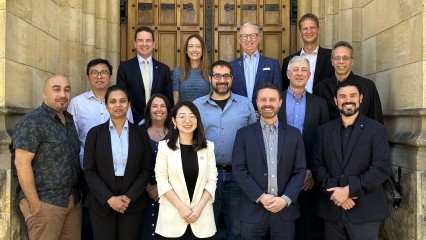
CVSSP and PAI's Professor Gustavo Carneiro (pictured middle row, right hand side), along with two PAI Fellows are playing leading roles in the new ambitious research partnership between The University of Surrey and The University of Adelaide, set to accelerate progress in space, AI, sustainability and cybersecurity.
Professor Carneiro, with his Adelaide counterpart, Dr Yuan Zhan are Principal Investigators (PI) in ‘Advancing AI-driven diagnostic tools for Endometriosis’.
PAI Fellow Professor Jin Xuan, with Adelaide counterpart, Professor Kannan Govindan are PI on another of the eight prestigious projects: ‘Exploring the challenges and opportunities of sustainable supply chain in Space circular economy’.
PAI Fellow, Professor Nishanth Sastry, with Adelaide co-PI, Professor Matthew Roughan, will be exploring a third project in the series: ‘Assessing the Communications Performance of Massive Satellite Systems’.
Congratulations to all participants in this ground breaking series of advances that demonstrate the power of international research cooperation.

We are delighted to welcome Graham Thomas, our newly appointed Professor of Creative Technology, to CVSSP.
“I have been fortunate enough to collaborate with Graham on numerous R&D projects over the past 20+ years. He brings a wealth of knowledge, expertise and experience in pioneering and deploying media technologies which will support the integration of Surrey’s Creative AI research across the CoSTAR National Lab.” Professor Adrian Hilton, Director of CVSSP.
“I'm really thrilled to be joining CVSSP, after spending over 40 years working at BBC R&D, including leading research using computer vision & graphics for programme production, and overseeing work on immersive audio. I did my PhD on video motion estimation while working at the BBC back in 1990, which led to a commercially successful standards converter still in use today for conversion between 50Hz and 60Hz TV standards. I went on to work on various video coding standards, then developed some of the first technology for virtual production, including a new keying method and a camera tracking system used both for TV production and in films including Harry Potter. I have been collaborating with Adrian Hilton and the CVSSP team on various projects since 1999, with project results contributing directly to a sports graphics system that has been in regular use by the BBC and many other broadcasters since 2004. I worked with Adrian and our partners at the University of Lancaster to set up the 5-year AI4ME Prosperity Partnership on personalised media at scale, which started in September 2021. I'll be continuing to work on this now I've joined CVSSP, helping to deliver impact across the BBC and the wider media industry. I will also be working with the Surrey team in the CoSTAR programme, on technical coordination and integration with the wider programme and creative industry partners. I'll be helping with training on the UKRI AI CDT in AI for Digital Media Inclusion, and mentoring PhD and post-doctoral researchers.
"Outside of work, I enjoy hiking and building over-complicated monitoring and control systems for my solar panels and heat pump.” Professor Graham Thomas

Alongside her valuable work at CVSSP as a Senior Lecturer in Machine Learning for Healthcare, Dr Samaneh Kouchaki is an outreach lead for the University of Surrey: “I am engaged in several initiatives to increase awareness of our strengths while supporting student success. Recently, I delivered a 20-minute talk on AI and health at Sir William Perkins's School in Chertsey, providing insights into the intersection of artificial intelligence and healthcare applications. Additionally, I am working on organising two to three interactive sessions through the Student Success and Channel Talent outreach programme to showcase our strengths and engage with prospective students. I am looking forward to the Summer School outreach activity in July 2025, which focuses on supporting the success of a wider range of students.”
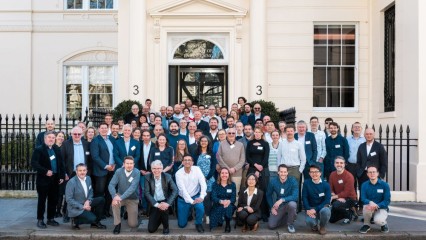
PAI and CVSSP’s Professor Mark Plumbley is the Network Lead for Noise Network Plus, a £1.8M EPSRC-funded interdisciplinary network designed to address the grand challenges for noise pollution for the next 10-15 years.
The Network was launched in March 2025 at London’s Prince Philip House, home to the Royal Academy of Engineering. The event brought together over 100 people from academia, industry, government and the third sector. All were there with a mission: to identify the issues and challenges of noise pollution, and to plan how the Network can address them.
Professor Plumbley started the day by discussing the hard problem of noise pollution, and how the issue fits within the “Tomorrow’s Engineering Research Challenges” identified in the 2022 “TERC” Report from the Engineering and Physical Sciences Research Council (EPSRC). Delegates heard spotlight talks on areas including: noise in the built environment[1]; new sources of noise[2]; and effects of noise on human health[3] and wildlife[4].
The afternoon started with an introduction to the Network by Co-Leads, Professor Alan Hunter, University of Bath, and Dr. Simone Graetzer, University of Salford. This was followed by talks, including University of Surrey’s Professor Abigail Bristow’s on inclusive engineering and how it relates to noise pollution.
In the final part of the afternoon, delegates considered how the Network can deliver lasting change to “engineer a quieter future”.
Noise Network Plus will shortly be putting out a call for Expressions of Interest in joining Working Groups. To keep up to date with announcements from Noise Network Plus, subscribe to the mailing list at https://www.jiscmail.ac.uk/NOISE
[1] Jack Harvie-Clark, Director Apex Acoustics
[2] Prof. Antonio J. Torija Martinez, Network Co-Lead, University of Salford
[3] Dr. Benjamin Fenech, Noise and Public Health Programme Lead, UKHSA
[4] Dr. Lia Gilmour, Research Manager, Bat Conservation Trust
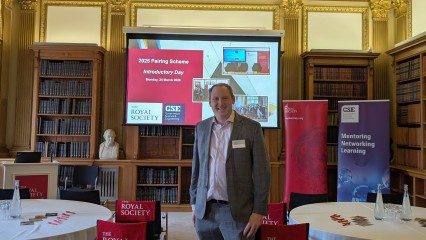
24 – 27 March 2025: 30 UK scientists swap places with politicians and civil servants, exploring the world of politics as part of the annual Royal Society Pairing Scheme.
CVSSP’s Professor John Collomosse is participating in the Scheme, working directly with the Department for Science, Innovation and Technology's team for policy and capability in AI and Disinformation. This vital initiative helps ensure evidence-based policymaking. Professor Collomosse's expertise, honed through DECaDE and his work in the formation of the Content Authenticity Initiative, will be invaluable. A fantastic opportunity to amplify our research for the public good.
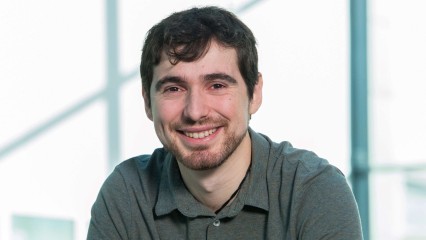
Dr Joaquin Prada has been appointed the new Co-Director of the Surrey Institute for People-Centred AI (PAI).
Since joining the University in 2017, Dr Prada has led efforts to integrate Artificial Intelligence (AI) and Machine Learning (ML) into veterinary and medical research. Based in the Faculty of Health and Medical Sciences (FHMS), he has built a multidisciplinary research group bridging AI, statistics, human and veterinary medicine, and social sciences.
A specialist in AI-driven quantitative modelling, Dr Prada collaborates across disciplines within and beyond the University. With a global research network, spanning multiple continents, he has worked with major organisations such as the World Health Organization (WHO) and the World Organisation for Animal Health (WOAH). As Research Impact Champion for the School of Veterinary Medicine and founding Chair of the Surrey Impact Leads Network (SILN), he has played a key role in driving AI integration across disciplines. His fluency in multiple languages further strengthens international collaborations.
Dr Prada describes his approach to this new role in two words: Supportive and Sustainable. He aims to maximise impact by focusing on existing research strengths, as well as enhancing AI integration between the Faculty, PAI and the wider AI community.
His priorities include fostering collaboration, expanding AI applications, and promoting AI competency at all levels—from generative AI in teaching to optimising research and processes. His leadership in both FHMS and PAI will help advance AI as a transformative force for good in health and medical sciences.
Professor Adrian Hilton (Director of PAI) commented: "We are thrilled to welcome Dr Joaquin Prada to the Surrey Institute for People-Centred AI. His expertise in AI-driven quantitative modelling and interdisciplinary collaboration will be invaluable in advancing AI applications in health and medical sciences. Joaquin’s commitment to a supportive and sustainable approach aligns perfectly with our mission, and we look forward to the impact he will make in shaping the future of AI at Surrey."
Dr Prada takes on the Co-Director (FHMS) role from Professor Inga Prokopenko who has been a founding Co-Director of the Surrey Institute for People-Centred AI since its launch in 2021. We would like to take this opportunity to thank Professor Prokopenko for all her contributions to the foundation of Surrey's first pan-University Institute, especially in successfully building collaboration between the Institute and academics across FHMS.
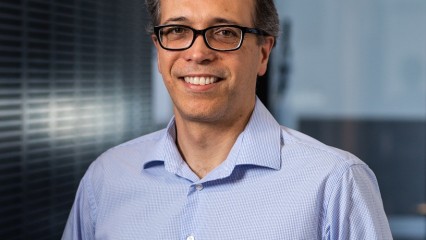
Huge congratulations to Dr Cuong Nguyen, Professor Gustavo Carneiro (pictured), and their Monash University collaborator, Dr Toan Do, on the acceptance and selection for oral presentation at ICLR 2025 of their paper, "Probabilistic Learning to Defer: Handling Missing Expert Annotations and Controlling Workload Distribution." Only 1.8% of ICLR submitted papers are selected for an oral presentation, so this is a well-deserved great honour.
This paper is a significant contribution from the EPSRC-funded People-Centred Mammogram Analysis (PecMan) project. It tackles the crucial challenge of developing AI models that can intelligently defer mammogram classifications to radiologists when uncertain.
We're hugely proud of the team for their ground-breaking work. We look forward to their presentation at ICLR 2025.
In an initiative led by Professor John Collomosse, CVSSP, with PAI is contributing to a significant new research initiative aimed at advancing responsible AI within the creative sector. This project, "Performance, Participation, Provenance and Reward in Responsible AI (P3R)," is part of the Arts and Humanities Research Council’s (AHRC) Bridging Responsibilities AI Divides (BRAID) programme.
Led by Royal Holloway, University of London (RHUL) and the CoSTAR National Lab, P3R is exploring how responsible AI tools can foster equitable opportunities for creatives and enhance environmental resilience. PAI's involvement underscores our founding tenet; to ensure AI development prioritises people-centred values and societal good.
“P3R builds upon DECaDE’s multi-year research programme in media provenance, teaming up with practice-led research in the CoStar National Lab to create new tools for fairly recognising and rewarding musicians for the re-use of their live performance. This will help ensure an equitable creator economy in the face of advances in AI.” Professor John Collomosse
Working alongside colleagues within RHUL, Abertay University, and The National Film and Television School, Professor Collomosse’s team is contributing to the development of a demonstrator that harnesses research out of the Surrey-led DECaDE research centre to put innovative tools for content rights and monetization into the hands of musicians. This initiative aims to help them discover new audiences and address the challenges faced by grassroots music venues across the UK.


